
Comparing Manual and Automatic Miniature Penetrometers in Soil Testing
I’ve used both styles on the same bench, sometimes on the same specimen. Manual tools win on simplicity; automatic rigs win on control and repeatability. Here’s a clear, lab-ready comparison to help you choose with confidence.
Operating Principle and Control Differences
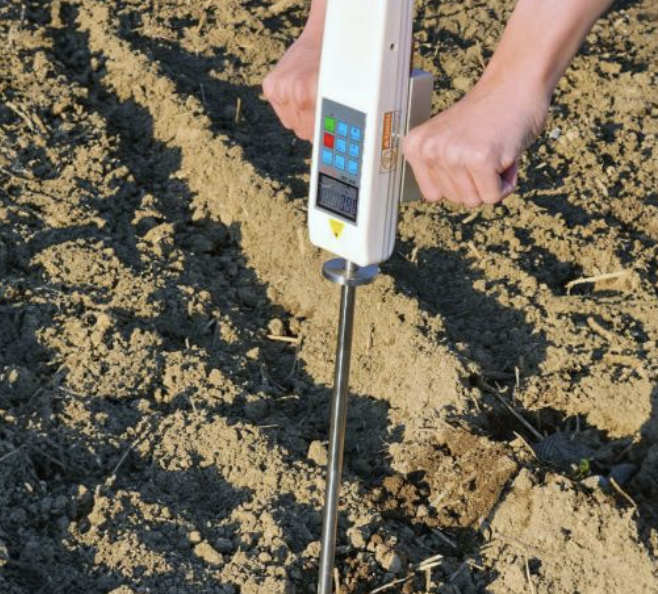
Manual penetrometers (spring-loaded, dial, or handheld digital) rely on a human to press at a roughly constant rate while reading force from a scale, dial, or digital display. Alignment is maintained by hand or a simple guide sleeve.
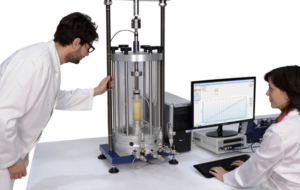
Automatic (motorized/electronic) penetrometers mount a load cell and tip on a micro-actuator. Software controls penetration speed, dwell, preload, and position1, and synchronizes with your DAQ. Operator influence is minimized; the machine repeats the same motion precisely.
Why this matters
- Rate control: manual = operator skill; automatic = closed-loop setpoint (e.g., 1.0 mm/min ±1%).
- Alignment: manual needs steady hands or a jig; automatic uses bushings/slides with low runout.
- Protocol fidelity: automatic systems can script grids (e.g., 3×3 points), cycles, and holds.
Quick cue: If your traces vary because of “human rhythm,” automation fixes it.
Accuracy, Repeatability, and Data Recording
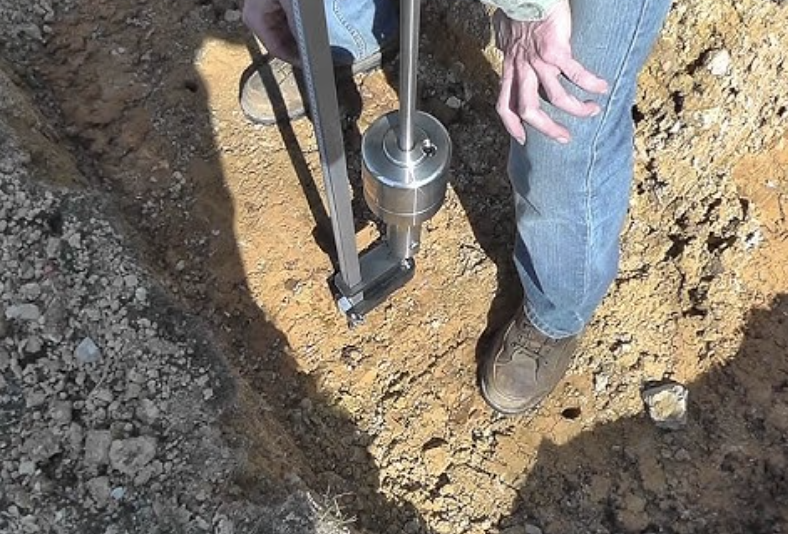
Manual
- Accuracy: Limited by spring/dial calibration and reading resolution; low-end force changes can be hard to resolve.
- Repeatability: Sensitive to rate, wobble, and tip seating. Better with a guide sleeve and strict SOPs.
- Data: Often transcribed by hand (risk: typos, missing timestamps). Handheld digital improves this with CSV export but still human-driven.
Automatic
- Accuracy: High if the load cell is well-calibrated (multi-point linearization2). Constant-rate motion reduces rate effects.
- Repeatability: Excellent—same speed, preload, and path every run.
- Data: Native time-stamped logs3 (force, position, rate), easy to overlay with axial load, pore pressure, and displacement.
Bench test you should run (both types)
- Noise floor at zero load, 60 s.
- Linearity at 0/25/50/75/100% FS.
- Creep/hold at ~50% FS, 120 s.
- Duplicate penetrations in fresh zones (acceptance band e.g., ±5–10%).
Efficiency and Testing Throughput
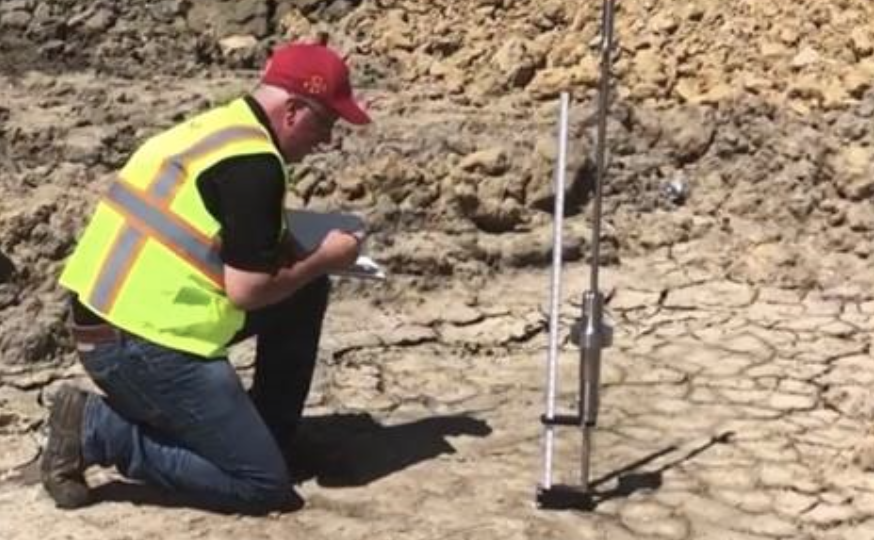
Manual
- Setup time: Minimal.
- Single-point speed: Fast for quick checks.
- Throughput: Drops with complex programs (multi-point grids, repeated cycles). Operator fatigue shows up as variability.
Automatic
- Setup time: Higher (mount, home, script).
- Single-point speed: Comparable, but motion/recording are automatic.
- Throughput4: Shines on multi-point maps, rate studies, or large batches—start a script, log everything, export, done.
Rule of thumb: If your plan includes >10 points/specimen or repeated rates/temperatures, automation5 usually pays for itself in a few projects.
Cost and Application Considerations
Total cost = hardware + integration + calibration + time. Manual appears cheapest until you factor retests and analyst time; automatic is pricier up front but cheaper per usable data point when test plans get complex.
Side-by-side snapshot
| Dimension | Manual Penetrometer | Automatic Penetrometer |
|---|---|---|
| Capex | $–$$ | $$$–$$$$ |
| Training | Minutes to hours | Hours to days |
| Rate control | Human skill | Closed-loop |
| Repeatability | Operator-dependent | High |
| Data logging | Manual / basic digital | Full, time-stamped, synchronized |
| Best for | Quick QA, teaching, soft soils | Research, QA with traceability, multi-point grids |
| Risk profile | Typos, rate/wobble artifacts | Integration/setup overhead |
Choose by scenario (cheat sheet)
- You need fast, occasional checks → Manual (dial or handheld digital).
- You publish or defend results → Automatic (logs + repeatability).
- Field-style flexibility → Manual spring/dial.
- Parametric studies / unsaturated / rate effects → Automatic with scripting.
- Mixed program → Keep both: manual for triage, automatic for final datasets.
Practical Buyer Tips (Applies to Both)
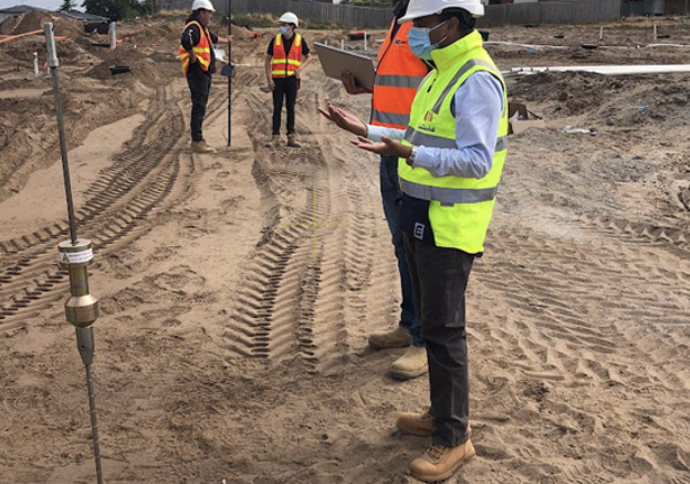
- Capacity: Aim for peak forces in 30–70% FS for best SNR and linearity.
- Tips: Cone for general soils; flat for very soft clays; hardened cones for cemented/weak rocklike.
- Alignment: Use a guide sleeve6 even on manual tools; wobble = side friction = fake strength.
- Calibration7: Per-session zero + two-point check; accredited multi-point every 6–12 months.
- Temperature band: Keep within ±1 °C during sessions; log it with each run.
- Synchronization: If automatic, time-lock with axial/pore channels; if manual, at least record start/end timestamps.
Conclusion
If your work is quick screening and teaching, a well-maintained manual penetrometer is honest and efficient. If you need repeatable, time-stamped, multi-point datasets that stand up to review, an automatic system is the calm, tireless operator you’ve been missing. Pick the simplest tool that meets your accuracy and traceability needs—then protect it with alignment, rate control, and calibration.
-
Understanding these factors is crucial for optimizing penetrometer performance and ensuring accurate measurements. ↩
-
Exploring multi-point linearization will deepen your knowledge of load cell technology, crucial for achieving high accuracy in measurements. ↩
-
Understanding time-stamped logs can enhance your data analysis skills, ensuring accurate and efficient data management. ↩
-
Understanding throughput can help you optimize your processes and improve efficiency. ↩
-
Exploring automation benefits can reveal ways to enhance productivity and reduce operator fatigue. ↩
-
Understanding the role of a guide sleeve can enhance your tool’s accuracy and reliability, ensuring better results. ↩
-
Regular calibration is crucial for maintaining accuracy; explore this link to learn best practices and guidelines. ↩