

UU, CU and CD triaxial tests differ mainly in whether a soil specimen is allowed to consolidate before shearing and whether drainage is permitted during shearing.
The three test types are:
- UU—Unconsolidated Undrained: The specimen is not allowed to consolidate under the applied cell pressure, and drainage is prevented during shearing.
- CU—Consolidated Undrained: The specimen is saturated and consolidated before shearing. Drainage is then prevented while pore-water pressure is measured during axial loading.
- CD—Consolidated Drained: The specimen is consolidated before shearing, and drainage is permitted throughout the shearing stage.
These differences determine which stresses, strength parameters, pore-pressure responses and volume changes can be evaluated.
The choice between UU, CU and CD testing should be based on field drainage conditions, soil permeability, stress history, loading rate and the engineering parameters required—not simply on which test can be completed fastest.
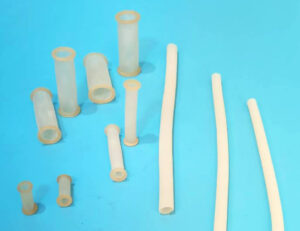
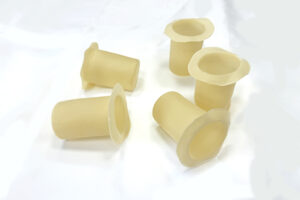
The flexible membrane is also an important part of all three test setups. It separates the specimen from the triaxial cell fluid while allowing confining pressure to act around the specimen. Incorrect membrane dimensions, installation damage, leakage or excessive membrane restraint can affect the test result.
Important: This article provides a practical technical comparison. It does not reproduce or replace the applicable ASTM standards. Laboratories should obtain the current standards from ASTM International and follow their approved procedures and quality systems.
Quick Comparison of UU, CU and CD Triaxial Tests
| Feature | UU test | CU test | CD test |
|---|---|---|---|
| Full name | Unconsolidated Undrained | Consolidated Undrained | Consolidated Drained |
| Consolidation before shear | No | Yes | Yes |
| Drainage during shear | No | No | Yes |
| Pore-pressure measurement | Not normally a primary standard output | Yes | Not normally required for strength interpretation |
| Volume change during shear | No drainage measurement | No drainage permitted | Measured |
| Primary stress interpretation | Total stress | Total and effective stress | Effective stress |
| Relative duration | Usually shortest | Longer than UU | Usually longest |
| Typical ASTM method | ASTM D2850 | ASTM D4767 | ASTM D7181 |
| Main use | Rapid total-stress undrained assessment | Undrained loading after consolidation, with pore-pressure measurement | Drained strength and volume-change behavior |
The table gives a general comparison. The exact test selection, apparatus configuration and interpretation must follow the applicable standard and project requirements.

Figure 1. Replace this placeholder with an original diagram comparing consolidation and drainage conditions in UU, CU and CD tests.
What Is a UU Triaxial Test?
UU means unconsolidated undrained.
In a UU test, the specimen is not allowed to consolidate under the applied cell pressure before axial loading begins. Drainage is prevented while confining pressure is applied and remains closed during the shearing stage.
The test is generally used to obtain a rapid total-stress evaluation of the undrained response of cohesive soil.
The main stages are:
- Prepare and measure the soil specimen.
- Enclose it in a flexible membrane.
- Install it in the triaxial cell.
- Apply the selected confining pressure without permitting drainage.
- Apply axial compression at the specified deformation rate.
- Record axial load and deformation.
- Continue to the applicable termination criterion.
- Examine and document the deformed specimen.
Because there is no consolidation stage, the UU test is normally faster than CU and CD testing.
However, “unconsolidated” describes the laboratory procedure. It does not necessarily mean that the soil in the field has never experienced consolidation.
What Does a UU Test Measure?
A UU test can provide:
- Axial load
- Axial deformation
- Axial strain
- Deviator stress
- Total-stress stress–strain response
- Total-stress undrained strength
- Failure mode
Pore-water pressure is not normally a primary measured output under the standard UU procedure. The test therefore does not provide the same direct effective-stress information as a CU test with pore-pressure measurement.
The ASTM method commonly associated with UU testing of cohesive soils is ASTM D2850.
What Is a CU Triaxial Test?
CU means consolidated undrained.
In a CU test, the specimen is first saturated and allowed to consolidate under the selected effective stress. Drainage is then closed, and the specimen is sheared without permitting water to enter or leave it.
Pore-water pressure is measured during the undrained shearing stage. This makes it possible to evaluate both total stresses and effective stresses.
The principal stages are:
- Prepare and install the specimen.
- Assemble and check the pressure and drainage system.
- Saturate the specimen.
- Verify that the required saturation condition has been achieved.
- Consolidate the specimen under the selected effective confining stress.
- Close the drainage lines.
- Apply axial compression at a controlled deformation rate.
- Measure axial load, deformation and pore-water pressure.
- Calculate total- and effective-stress responses.
- Examine and document the specimen after testing.
What Does a CU Test Measure?
A CU test can provide:
- Axial load and deformation
- Axial strain
- Deviator stress
- Cell pressure
- Pore-water pressure
- Excess pore-pressure development
- Total principal stresses
- Effective principal stresses
- Total-stress stress paths
- Effective-stress paths
- Stress–strain behavior
- Strength and deformation characteristics
When a strength envelope is required, multiple specimens are commonly tested at different effective consolidation stresses.
The ASTM method associated with consolidated undrained triaxial compression testing of saturated cohesive soils is ASTM D4767.
For a more detailed explanation of the equipment, procedure and membrane considerations, read our ASTM D4767 consolidated undrained triaxial test guide.
What Is a CD Triaxial Test?
CD means consolidated drained.
As with a CU test, the specimen is saturated and consolidated before shearing. The main difference is that drainage remains open during the shearing stage.
Axial loading must be slow enough for the relevant pore pressure to dissipate without significant unintended buildup. Because low-permeability soils can drain very slowly, CD testing may require considerably more time than UU or CU testing.
What Does a CD Test Measure?
A CD test can provide:
- Axial load
- Axial deformation
- Axial strain
- Deviator stress
- Cell pressure
- Drained volume change
- Effective-stress strength
- Stress–strain behavior
- Volumetric response
- Failure mode
The ASTM method commonly associated with consolidated drained triaxial compression testing of soils is ASTM D7181.
Drainage Conditions During Each Test
Drainage is one of the most important differences between UU, CU and CD testing.
| Test stage | UU | CU | CD |
|---|---|---|---|
| Applying cell pressure | Drainage closed | Controlled as part of saturation setup | Controlled as part of saturation setup |
| Saturation stage | Not performed as a separate standard stage | Performed | Performed |
| Consolidation stage | Not performed | Drainage open | Drainage open |
| Shearing stage | Drainage closed | Drainage closed | Drainage open |
| Pore-pressure measurement during shear | Not normally a primary output | Required for effective-stress analysis | Not normally central to drained strength interpretation |
| Volume change during shear | Not obtained through drainage | No drainage permitted | Measured through the drainage system |
Exact valve sequences and pressure-control procedures must follow the applicable standard and the laboratory’s approved test method.

Figure 2. Replace this placeholder with an original diagram showing the valve conditions during UU, CU and CD testing.
What Results Does Each Test Provide?
Undrained Shear Strength
Both UU and CU tests involve undrained shearing, but they do not begin from the same laboratory condition.
In a UU test, the specimen is not consolidated under the applied cell pressure before shearing. The result is interpreted primarily using total stresses.
In a CU test, the specimen is first consolidated under a selected effective stress. The undrained strength then reflects the specimen’s response after that consolidation stage.
The two results should not be treated as interchangeable merely because both tests are called undrained.
Pore-Water Pressure
Pore-water-pressure measurement is a defining feature of a CU test performed for effective-stress analysis.
During undrained shearing, changes in applied stress produce changes in pore-water pressure. Measuring that response allows the effective stresses to be calculated.
A standard UU test does not provide the same pore-pressure information.
Effective-Stress Strength
CU testing with pore-pressure measurement and CD testing can both provide information for effective-stress interpretation, but they do so under different drainage conditions.
- In a CU test, effective stresses are calculated using measured pore pressure during undrained shearing.
- In a CD test, drainage is allowed so that significant excess pore pressure does not accumulate during properly controlled shearing.
Selection of design parameters from either test requires qualified engineering judgment.
Volume Change
A CD test allows drainage during shearing, so the volume of water entering or leaving the specimen can be measured and used to evaluate volumetric behavior.
No drainage is permitted during the shearing stage of UU and CU tests, so drained volume change is not measured in the same way.
Relative Testing Time
It is misleading to assign a universal number of minutes or hours to each test.
The actual duration depends on:
- Soil permeability
- Specimen diameter and height
- Initial saturation
- Drainage-path length
- Required consolidation condition
- Effective confining stress
- Loading rate
- Laboratory acceptance criteria
- Equipment capacity and automation
- Required number of specimens
The relative comparison is more reliable:
| Test | Relative duration | Reason |
|---|---|---|
| UU | Usually shortest | No separate saturation or consolidation stage |
| CU | Intermediate | Saturation and consolidation are required before undrained shearing |
| CD | Usually longest | The specimen must remain sufficiently drained during shearing |
A UU test should not be selected merely because a project has a short deadline. The test must still represent the relevant engineering condition and provide the required parameters.
How to Choose Between UU, CU and CD
Test selection should begin with the engineering question.
| Engineering requirement | Possible test direction |
|---|---|
| Rapid total-stress undrained assessment of cohesive soil | UU |
| Soil has consolidated before a rapid undrained load change | CU |
| Need pore-pressure response during undrained shearing | CU |
| Need total- and effective-stress paths | CU |
| Need drained strength behavior | CD |
| Need volume change during shearing | CD |
| Need short-term and long-term assessment | A coordinated program using more than one test type |
| Field condition is uncertain or complex | Selection by a qualified geotechnical professional |
Important selection factors include:
- Soil type
- Soil permeability
- Degree of saturation
- Stress history
- In-situ effective stress
- Loading rate
- Field drainage boundaries
- Required design parameters
- Project stage
- Applicable specification or standard
Example Engineering Conditions
Rapid Loading of Saturated Cohesive Soil
If saturated cohesive soil is subjected to loading too rapidly for drainage to occur, an undrained test may be appropriate.
Whether UU or CU is selected depends partly on whether the laboratory test should include consolidation to a defined effective stress before shearing.
Soil Consolidated Under Existing Stress
If the field soil has already consolidated under an existing stress state and is then subjected to a relatively rapid load change, a CU test may provide a more representative stress path than a UU test.
Pore-pressure measurement also allows the effective-stress response to be evaluated.
Slow Loading With Sufficient Drainage
If field loading occurs slowly enough for excess pore pressure to dissipate, drained strength and volumetric behavior may be more relevant. A CD test may then be appropriate.
Real projects may require more than one test type. For example, engineers may need both short-term undrained and long-term drained assessments.
Equipment Differences
UU, CU and CD tests use similar basic triaxial components, but the pressure-control and measurement requirements differ.
Typical UU Equipment
- Triaxial cell
- Loading frame
- Load-measurement device
- Deformation-measurement device
- Cell-pressure system
- Pedestal and top cap
- Flexible membrane
- Membrane stretcher
- O-rings
- Data-acquisition equipment
Additional CU Requirements
A CU system also requires equipment for:
- Back-pressure control
- Pore-pressure measurement
- Saturation procedures
- Consolidation drainage
- Volume-change or water-flow measurement
- De-aired water
- Detailed valve and pressure control
Additional CD Requirements
A CD system requires controlled drainage and reliable volume-change measurement during shearing. The loading system must be capable of maintaining a sufficiently slow and stable deformation rate.
Equipment selection should be based on the applicable standard, expected pressure range, specimen size and required measurement accuracy.
Do UU, CU and CD Tests Use Different Membranes?
The membrane performs the same fundamental function in all three tests: it separates the soil specimen from the triaxial cell fluid while transmitting confining pressure around the specimen.
However, test conditions affect membrane selection and quality-control priorities.
| Membrane consideration | UU | CU | CD |
|---|---|---|---|
| Correct diameter and length | Required | Required | Required |
| Reliable end sealing | Important | Critical | Critical |
| Test duration | Usually shorter | Longer | Often longest |
| Leakage consequences | Can invalidate the test | Can affect saturation, consolidation and pore-pressure response | Can affect drainage and volume-change measurements |
| Resistance to installation damage | Required | Required | Required |
| Long-duration stability | Moderate concern | Higher concern | Higher concern |
| Membrane restraint | Evaluate when applicable | Evaluate when applicable | Evaluate when applicable |
| Membrane penetration | Evaluate for coarse or irregular specimens | Evaluate for coarse or irregular specimens | Evaluate for coarse or irregular specimens |
The test designation alone does not determine the correct membrane thickness.
Membrane selection should consider:
- Specimen diameter
- Specimen height
- Expected axial strain
- Soil surface texture
- Presence of projecting particles
- Cell pressure
- Test duration
- Nominal membrane thickness
- Actual membrane tolerances
- Installation method
- Applicable membrane correction
Selecting the Membrane Diameter and Length
Inside Diameter
The membrane should fit the specimen without excessive looseness, folds or damaging installation strain.
Selection should be based on the specimen’s measured diameter and the membrane’s actual dimensional tolerance.
A membrane that is too large may wrinkle or fold. A membrane that is too small may require excessive stretching during installation and may become vulnerable to tearing.
Length
The membrane must cover the specimen and provide sufficient overlap at the pedestal and top cap.
The required length depends on:
- Specimen height
- Pedestal geometry
- Top-cap geometry
- O-ring location
- End-sealing method
- Expected axial deformation
The membrane must remain securely sealed throughout the test.
Thickness
A thinner membrane may reduce mechanical restraint but can be more vulnerable to puncture or installation damage.
A thicker membrane may improve handling durability but can exert a greater influence on a soft or deforming specimen.
The laboratory should choose a thickness validated for its specimen, soil condition, test pressure and correction procedure.
[Insert actual company table: Available membrane inside diameters, lengths, nominal thicknesses and verified manufacturing tolerances.]
Do not publish tolerances that are not supported by actual production and quality-control records.
Installing the Latex Membrane
A typical installation process includes the following steps:
- Inspect the membrane for holes, cracks, contamination and visible thickness irregularity.
- Check the pedestal, top cap and O-rings for dirt or sharp edges.
- Prepare the porous stones, drainage components and filter materials.
- Position the specimen centrally on the pedestal.
- Load the membrane into a clean membrane stretcher.
- Expand the membrane using the approved vacuum or mounting method.
- Lower it carefully over the specimen without scraping the soil surface.
- Release the membrane evenly around the specimen.
- Install the top cap.
- Seal the membrane at both ends with the approved O-rings.
- Check for folds, twisting, insufficient overlap and tool damage.
- Perform the required system and leakage checks.

Figure 3. Replace this placeholder with an original photograph of your membrane installation process.
For a detailed mounting procedure, see our latex membrane installation guide.
How Membrane Leakage Affects Each Test
UU Test
A leak can allow cell fluid to reach the specimen or disturb the intended undrained condition. This may affect the measured response or cause the test to fail.
CU Test
Leakage can interfere with:
- Saturation
- Back-pressure control
- Consolidation measurements
- Pore-pressure response
- Undrained shearing
Because CU testing relies heavily on pressure measurement and drainage control, even a small leak can make the results difficult to interpret.
CD Test
Leakage can be mistaken for specimen drainage or volume change. This is especially problematic when the test runs for a long period and small volume changes are being measured.
Common Membrane Problems
| Problem | Possible cause | Recommended check |
|---|---|---|
| Wrinkles around the specimen | Membrane too large or installed unevenly | Confirm specimen and membrane diameter |
| Tear near the pedestal | Sharp edge, damaged O-ring or tool contact | Inspect pedestal, seals and mounting tool |
| Mid-height puncture | Sharp particle or irregular specimen surface | Inspect the puncture location and specimen |
| Membrane slips from the top cap | Insufficient overlap or incorrect sealing | Review membrane length and O-ring position |
| Pressure cannot be maintained | Membrane or system leakage | Isolate and test cell, tubing, fittings and membrane |
| CU pore pressure is unstable | Trapped air, leakage or incomplete saturation | Check the full pressure and drainage system |
| CD volume change is inconsistent | Leakage, temperature change or measurement error | Verify system stability before accepting the result |
The location and appearance of membrane damage should be recorded after a failed test. This helps distinguish installation damage from an unsuitable membrane, rough specimen surface or equipment problem.
Membrane Information to Record
For improved traceability, consider recording:
- Membrane supplier
- Material
- Product or batch number
- Nominal inside diameter
- Nominal length
- Nominal thickness
- Measured thickness, if required
- Condition before installation
- Installation method
- End-sealing arrangement
- Condition after testing
- Applicable membrane correction
- Reason for rejecting or replacing a membrane
This information is particularly useful when comparing tests performed with different specimen sizes, membrane batches or laboratories.
Frequently Asked Questions
What is the main difference between CU and UU tests?
A CU specimen is consolidated before undrained shearing, while a UU specimen is not allowed to consolidate under the applied cell pressure before shearing.
A CU test also measures pore-water pressure when effective-stress analysis is required.
Which test is faster, UU or CU?
UU is usually faster because it omits the separate saturation and consolidation stages required for CU testing.
The actual duration depends on the specimen, soil and laboratory procedure.
Can a UU test provide effective-stress parameters?
A standard UU test is primarily interpreted using total stresses and does not provide the same pore-pressure information as a CU test. It is therefore not normally used to derive the same effective-stress response.
Why is pore pressure measured in a CU test?
Pore-pressure measurement allows effective stresses to be calculated during undrained shearing. It also provides information about how the soil responds to the applied stress path.
Is a CU test the same as a CD test?
No. Both include consolidation before shearing, but drainage is closed during CU shearing and remains open during CD shearing.
Is CU always used for long-term stability?
No. CU shearing is undrained. The test is particularly relevant when a consolidated soil is subjected to loading without sufficient time for drainage.
The measured pore pressure permits effective-stress interpretation, but selection of long-term design parameters still requires qualified engineering judgment.
Can the same latex membrane be used for UU, CU and CD tests?
Possibly, if its dimensions, material, thickness and condition are appropriate for the specimen and test setup.
Longer CU and CD tests may place greater emphasis on leakage resistance, dimensional stability and aging. Membrane selection should be based on actual test conditions rather than the test abbreviation alone.
Does a thicker membrane always prevent failure?
No. A thicker membrane may improve puncture resistance but can also increase membrane restraint. The appropriate thickness depends on specimen size, soil texture, pressure, deformation and correction requirements.
Conclusion
UU, CU and CD triaxial tests use similar apparatus but represent different consolidation and drainage conditions.
- UU testing provides a relatively rapid total-stress undrained assessment without allowing consolidation under the applied cell pressure.
- CU testing consolidates the specimen before undrained shearing and measures pore-water pressure, allowing total- and effective-stress analysis.
- CD testing permits drainage during shearing and provides drained strength and volume-change behavior.
Test selection should reflect field stress history, drainage conditions, soil permeability, loading rate and the engineering parameters required.
The latex membrane is essential in all three test types. Correct diameter, length, thickness, inspection and installation help maintain specimen isolation and reliable pressure control. Leakage, punctures, wrinkles and excessive membrane restraint can compromise an otherwise carefully prepared test.
Discuss Your Triaxial Membrane Requirements
Need a latex membrane for a UU, CU or CD triaxial setup?
Send us the following information:
- Specimen diameter
- Specimen height
- Required membrane length
- Preferred nominal thickness
- Soil surface condition
- Expected cell pressure
- Expected test duration
- Required quantity
- Equipment or triaxial cell model
- Any special tolerance or packaging requirements
We can review standard and custom latex membrane options for your laboratory equipment.
[Button: Discuss Your Triaxial Membrane Requirements]
Technical References
- ASTM International. ASTM D2850—Standard Test Method for Unconsolidated-Undrained Triaxial Compression Test on Cohesive Soils.
- ASTM International. ASTM D4767—Standard Test Method for Consolidated Undrained Triaxial Compression Test for Cohesive Soils.
- ASTM International. ASTM D7181—Standard Test Method for Consolidated Drained Triaxial Compression Test for Soils.



One Response