June and July are when freight turns emotional—fast. One week you’re calm, next week you’re paying surcharges.
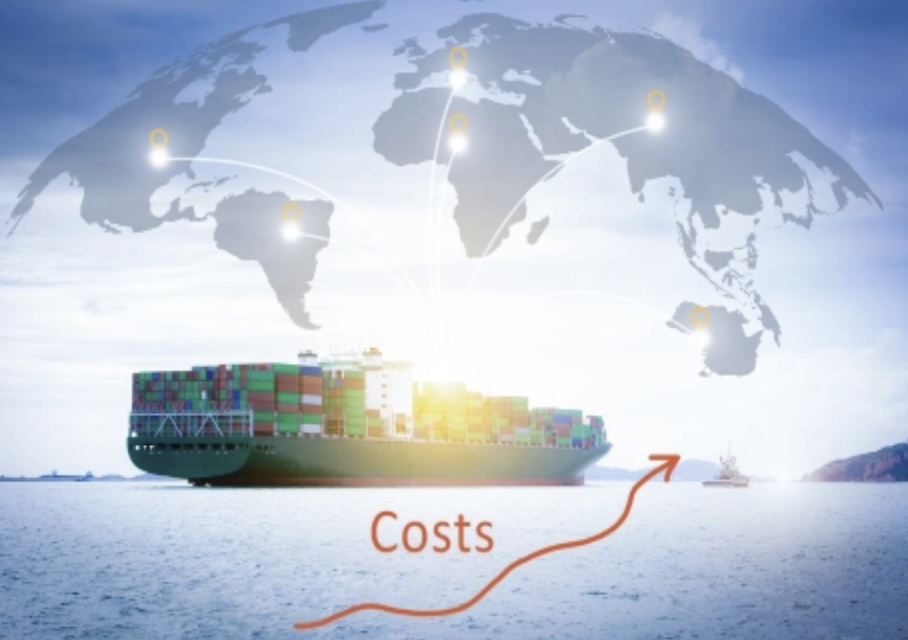
In June 2026, China export spot rates were roughly $3,200–$5,500 per 40ft (FEU) to the US and $3,000–$5,100/FEU to Europe, with July 2026 likely higher due to peak season demand, fuel changes, and new PSS/GRIs.
Let me break it down like I’d explain it to a buyer over coffee.
Current Ocean Freight Rates from China to Major Global Markets
Rates move daily, but we can anchor on reliable lane benchmarks and weekly averages.
Early June 2026 benchmarks showed Shanghai→LA around $4,565/FEU, Shanghai→NY around $5,505/FEU, Shanghai→Rotterdam around $3,579/FEU, and Shanghai→Genoa around $5,089/FEU.
If you’re asking “How much does ocean freight cost from China in June 2026?” the honest answer is: it depends on the exact week, carrier space, and how last-minute you are. But we can use public spot-rate benchmarks as a solid reference point.
In early June 2026, Drewry’s assessed spot rates (Shanghai origin) were already climbing as peak season started early. Their published lane numbers included:
- Shanghai → Los Angeles: $4,565 per 40ft
- Shanghai → New York: $5,505 per 40ft
- Shanghai → Rotterdam: $3,579 per 40ft
- Shanghai → Genoa: $5,089 per 40ft
At the same time, Freightos’ weekly averages (end of May / very early June) described roughly:
- ~$3,200/FEU to the US West Coast
- ~$5,000/FEU to the US East Coast
- ~$3,000/FEU to North Europe
- ~$4,400/FEU to the Mediterranean
Why the difference? Because one is a lane assessment snapshot, the other is a weekly average, and your real quote depends on space availability + timing + whether a Peak Season Surcharge (PSS) is applied. Freightos also noted daily rates spiking as GRIs/PSS rolled in.
Here’s a simple “blog-friendly” view (spot references, FEU = 40ft):
| Destination (from China) | June 2026 practical spot range (FEU) | What moves it most |
|---|---|---|
| US West Coast | ~$3,200–$4,600 | capacity + PSS + timing |
| US East Coast | ~$5,000–$5,500 | longer transit + allocations |
| North Europe | ~$3,000–$3,600 | fuel + demand pull-forward |
| Mediterranean | ~$4,400–$5,100 | tightness + PSS |
Why Ocean Freight Prices Typically Rise During June and July
June/July is when demand wakes up—and carriers price in both risk and urgency.
Prices usually rise because of early peak-season orders, carrier GRIs/PSS, and fuel adjustments—plus 2026-specific pressure from higher bunker costs and geopolitical disruption.

June and July are classic “peak-season ramp” months. Retailers build inventory for late-summer promotions and the holiday runway. Even if your product isn’t seasonal, you’re competing for the same space.
In 2026, there are extra accelerants:
1) Peak Season Surcharges are real money.
For example, Maersk published a Peak Season Surcharge (PSS) for Far East Asia → US/Canada effective 17 June 2026, with $2,000 per 40/45ft listed.
Freightos also highlighted a wave of GRIs/PSS pushing daily rates higher in early June.
2) Demand was pulled forward.
Drewry noted seasonal demand strengthening through June and pointed to bookings being pulled forward ahead of possible US tariff changes expected in July.
3) Fuel and disruption were not “background noise.”
Reuters reported a sharp rise in bunker fuel costs tied to Middle East conflict dynamics, adding upward pressure to container shipping rates and surcharges.
So, when you ask “why do rates rise in June and July?” I answer: it’s not just demand. It’s demand + surcharges + fuel + carriers managing capacity.
If you’re writing SOPs for your purchasing team, this is the simple rule: June/July punishes late bookings.
Freight Rate Forecast: What to Expect in Q3 2026
Q3 is usually “peak pressure,” but 2026 has a tug-of-war: demand vs overcapacity.
Expect elevated rates through early Q3 (July–August), with volatility from fuel and capacity controls; later Q3 may soften if carriers reopen capacity or demand cools.
I’m going to be transparent: forecasting freight is more like weather than math. But we can outline the forces that matter for Q3 2026.
Upward forces (higher rates):
- Peak-season demand is arriving early, and Drewry explicitly expected further upward pressure “in the coming weeks” as seasonal demand strengthens through June.
- Fuel risk is feeding into carrier surcharges and market sentiment (Reuters’ reporting on bunker cost pressure is a good example).
Downward forces (lower rates):
- The container market still faces a structural overcapacity story. Freightos’ January 2026 outlook warned of a downcycle pressure in 2026 as new vessel capacity enters the market, with carriers using capacity management levers (blank sailings, idling, slow steaming) to manage rate dips.
- Reuters has also highlighted carrier profit risk tied to overcapacity and potential route normalization.
So what does that mean in human terms?
- July 2026: likely high and jumpy, especially if you ship US-bound and you’re booking late. PSS/GRIs tend to “stick” when demand is hot.
- August 2026: often still firm (back-to-school + early holiday pipeline), but depends on carrier capacity tactics.
- September 2026: can cool off if demand slows and capacity reappears—but any new disruption can reverse that fast.
My practical forecast for importers is: assume July–August costs are higher than June, budget a volatility buffer, and lock space earlier than you feel comfortable.
How Importers Can Reduce Shipping Costs During Peak Season
You can’t control the market, but you can control timing, flexibility, and how “easy” your cargo is.
Reduce costs by booking earlier, staying flexible on routing/ports, consolidating shipments, avoiding last-minute changes, and negotiating all-in terms (including PSS and local charges).
This is the part I care about most—because it’s actionable.
1) Stop buying “shipping at the end”
Peak season punishes procrastination. If you can pull forward cargo even 1–2 weeks, you often avoid the worst of the surge + premium space. Freightos’ commentary in early June basically described exactly this squeeze: contracted shippers seeing allocations reduced and premiums applied.
2) Make your routing flexible (even slightly)
If your consignee can accept a nearby port or inland option, you gain bargaining power. Flexibility is currency in June/July.
3) Negotiate in all-in logic, not headline rate
Ask for breakdowns:
- ocean base (FAK)
- PSS / GRI
- BAF / fuel
- destination local charges
- demurrage/detention terms
A “cheap” ocean rate can still become expensive after local charges.
4) Consolidate and standardize
Mixed SKUs, odd packaging, last-minute carton changes—those are silent cost multipliers. Standard cartons and stable volumes improve your forwarder’s ability to secure space.
5) Consider split strategy for risk control
For high-value launches, I’ve seen smart importers split:
- part ocean (normal)
- a small portion by faster mode (air/sea-air) for safety stock
This doesn’t “save freight,” but it saves your business when July rates spike.
Here’s a simple peak-season playbook:
| Tactic | Best for | Why it works |
|---|---|---|
| Book 2–3 weeks earlier | July shipments | avoids premiums |
| Flexible ports | US/EU | more space options |
| Lock “all-in” terms | budget control | fewer surprise add-ons |
| Tight packaging discipline | high volume | lowers handling friction |
Conclusion
June rates are already elevated, and July 2026 is likely higher—plan early, budget volatility, and treat surcharges like part of the real price.