
How to Become a Geotechnical Engineer: Degrees, Licenses, and Career Tips
When I first heard “geotechnical engineer,” I honestly thought it sounded like a niche inside a niche.
Now I know it’s the quiet backbone of a lot of big decisions: tunnels, slopes, dams, offshore foundations, wind farms, metros, high-rise basements.
If you’re thinking about this career (or already halfway in), here’s a clear roadmap: from degrees, to licenses, to real-world experience, plus some hard-earned career tips I wish I’d heard earlier.

Education Path: Degrees and Core Subjects for Geotechnical Engineers
Most geotechnical engineers start with a civil engineering degree. Some come from geology, geo-environmental, or earth science backgrounds, but civil is the most common entry point.
1. Bachelor’s degree (your foundation)
A typical path is:
- BSc / BEng in Civil Engineering1 (or similar)
- Optional: BSc in Geology / Geological Engineering if you want a ground-focused route
During your undergrad, pay attention to modules that quietly set you up for geotech:
Core subjects to take seriously
- Soil Mechanics2 – the “physics of dirt.” You’ll live with this forever.
- Rock Mechanics – especially for tunnels, slopes, dams, mines.
- Foundation Engineering – shallow and deep foundations, bearing capacity, settlement.
- Slope Stability & Earth Retaining Structures – embankments, cuts, walls.
- Hydrogeology / Groundwater Flow – seepage, pore pressures, drainage.
- Structural Analysis & Mechanics – you’ll often work with structural engineers.
- Engineering Geology – mapping, rock description, geomorphology.
Bonus subjects that quietly help later
- Basic programming (Python/Matlab) for data processing and analysis.
- Statistics and probability – for dealing with variability and risk.
- Engineering drawing / CAD – simple cross-sections, logs, and details.
2. Master’s degree (optional, but very useful)
Is a master’s required? Not always.
Is it helpful in geotech? Very often, yes.
You might look for:
- MSc / MEng in Geotechnical Engineering3
- MSc in Geotechnical and Structural Engineering
- MSc in Geo-environmental, Tunnelling, or Offshore Geotechnics
A good master’s lets you:
- Dive deeper into advanced soil behaviour4 and numerical analysis (FEM, PLAXIS, FLAC etc.).
- Work on a research project: instrumented embankment, triaxial testing, tunnel modelling, etc.
- Build connections with academics and industry sponsors.
If your bachelor’s was quite general, a geotech MS is often what turns you from “civil with some soil” into “geotechnical engineer”.
3. PhD (only if it matches your goals)
A PhD is great if you want to:
- Work in research, universities, or high-end consultancy.
- Focus on very specialized topics (e.g. liquefaction, offshore foundations, unsaturated soils, advanced numerical modelling).
You do not need a PhD to have a good geotechnical career.
But if you enjoy deep research and modelling, it can fit very well.
Licenses and Certifications: Meeting Professional Requirements
Degrees get you in the door. Licenses and certifications let you take responsibility and move up.
Naming changes by country, but the idea is similar.
1. Core professional license (your big milestone)
Depending on where you work, this could be:
- Professional Engineer (PE)
- Chartered Engineer (CEng)
- P.Eng
- CPEng, or similar
What they all say is basically:
“This person is recognised as a professional engineer and can legally take responsibility for design and reports.”
Common requirements:
- An accredited degree5 (bachelor, sometimes plus master).
- Several years of supervised practice (often 3–5+).
- Passing written exams (fundamentals + professional practice / ethics).
- References from already licensed/chartered engineers.
- Ongoing CPD (continuing professional development6).
Why this is worth chasing:
- You can sign geotechnical design reports, foundation checks, slope stability as the responsible engineer.
- Many senior positions require a license.
- It’s a strong signal to clients and employers that you take both technical and ethical responsibilities seriously.
2. Extra certifications and specialist registrations
Once you’re on track for your core license, you can add:
- Specialist geotechnical registrations (where available)
- Lab/testing accreditations if you work in a geotechnical lab
- Safety / temporary works / tunnelling certificates if you focus on construction or underground work
- Project management certifications if you want to lead teams and projects
These add flavour and help you stand out, but don’t distract from the main goal: becoming a licensed/chartered engineer first.

Gaining Practical Experience: Labs, Fieldwork, and Internships
Geotechnical engineering is very much a hands-on discipline. The sooner you meet real soil, the better.
1. Start early: labs and student projects
In university, don’t just “get through” the labs—use them:
- Learn how triaxial, oedometer, direct shear, and permeability tests actually work.
- Notice what good data vs bad data looks like.
- Volunteer to help with research testing if possible; this gives you more lab hours than standard coursework.
Lab time pays off later when you have to:
- Question suspicious data from commercial labs.
- Design meaningful test programs for site investigations.
- Communicate with lab technicians using clear, realistic requests.
2. Internships and vacation work
Internships are gold. Aim for roles where you can:
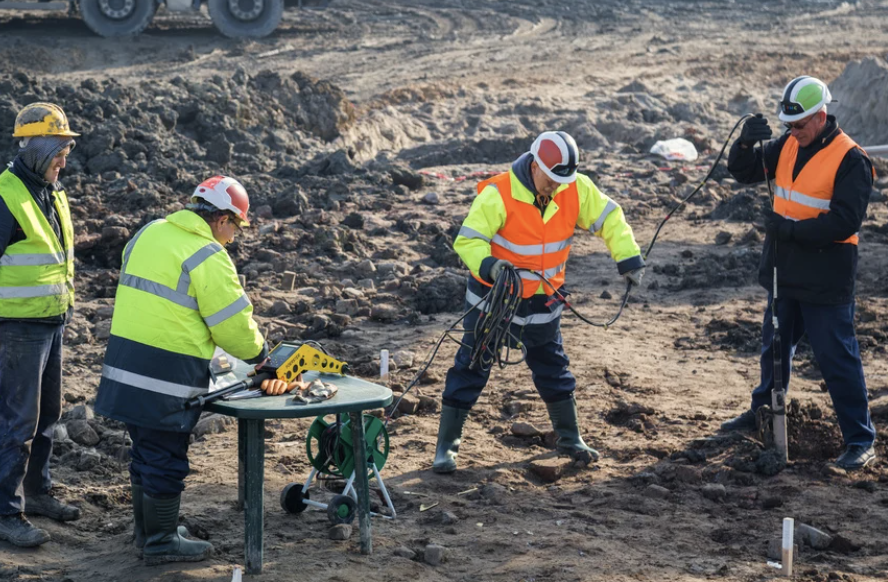
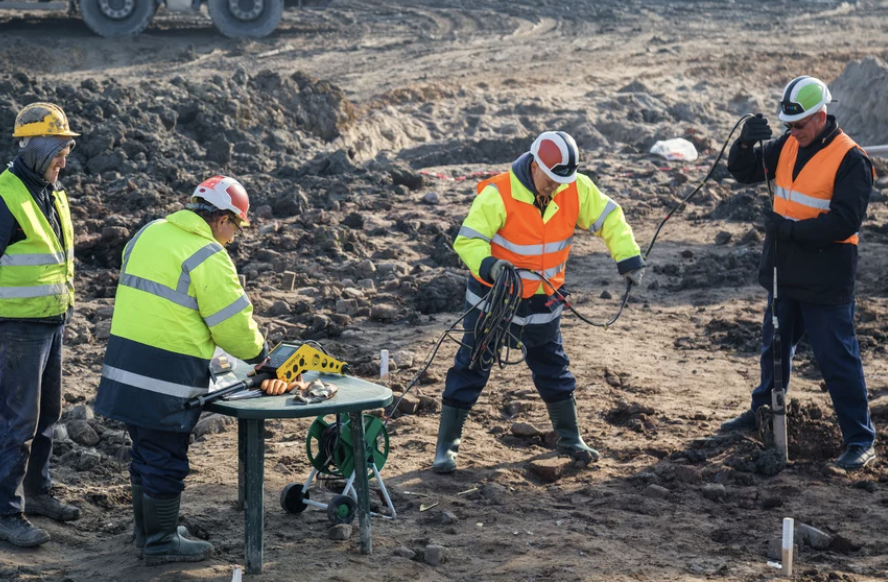
- Help with site investigations7 – boreholes, trial pits, sampling, in-situ tests (SPT, CPT, pressuremeter).
- Assist in geotechnical labs – sample preparation, testing, basic analysis.
- Shadow engineers working on foundation design8, slopes, retaining walls, or ground improvement.
Even if early internships feel “basic” (logging, taking photos, carrying kit), you’re learning:
- How real ground differs from textbook sections.
- How reports, drawings, and site records fit together.
- How contractors, clients, and engineers interact (and argue!).
3. Graduate roles: say yes to variety
In your first job, try to get a mix of:
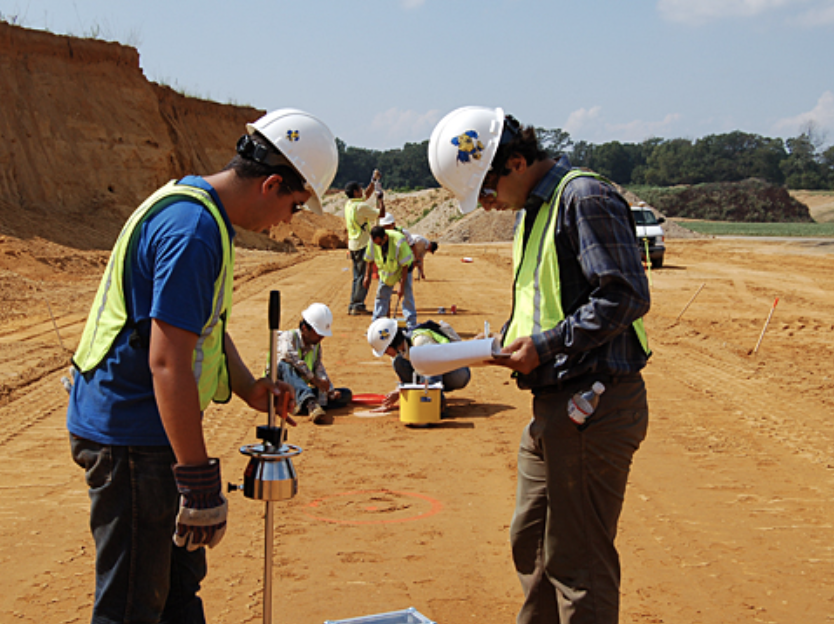
- Fieldwork – you’ll understand soil and rock much better after standing in it.
- Office design – use software, hand calcs, and standards on real projects.
- Reporting – yes, writing; we’ll come back to that.
Don’t rush to specialise too tightly in year one.
A broad geotechnical base makes you much stronger later, even if you eventually aim at a niche (offshore, tunnelling, dams, etc.).
Career Tips for a Successful and Sustainable Geotechnical Career
Technical skills matter. But long-term success in geotechnical engineering also depends on how you work and how long you can keep going without burning out.
Here are the things I see working best:
1. Treat communication as a technical skill
Some of the most respected geotechnical engineers I’ve met are:
- Great at explaining complex soil behaviour in plain language.
- Very good at writing clear reports that non-geotechs can act on.
- Comfortable summarising risk and uncertainty without scare tactics.
You can practice this early:
- Write short, clean lab summaries.
- Draw simple, readable sketches of ground models and failure mechanisms.
- Explain your design thinking to a friend in another discipline.
If people understand you, they trust you.
If they trust you, they come back.
2. Learn enough software—but not only software
You will probably use things like PLAXIS, FLAC, MIDAS, LPILE, SLOPE/W, etc.
Good engineers:
- Understand the assumptions behind the models.
- Can do simple hand checks as a sanity test.
- Don’t treat pretty plots as “truth” if the input was weak.
Learn the tools, but always ask:
“Does this result make sense for this soil, this loading, and this geometry?”
3. Protect your field time
It’s easy to get trapped behind a screen. Try to:
- Go to site when investigations happen, especially early in your career.
- Stand by the borehole or trial pit while logging is done.
- Look at failed slopes, distressed foundations, or excavations with problems.
These memories will shape your judgement more than any lecture slide.
4. Build a sustainable work style
Geotechnical projects can be intense: tight programmes, night possessions, bad weather, emergency stabilisations.
A few habits that help:
- Set boundaries where possible (especially on “routine” late nights).
- Keep a simple learning log of what each project taught you.
- Find at least one mentor you can ask “stupid questions” safely.
- Invest in your health: sleep, basic fitness, and time away from screens matter more than they sound.
You want a career that you can keep doing well for 20–30+ years, not just survive the next deadline.
5. Stay curious and keep updating your mental model
Soil mechanics is not “finished”. New research, case histories, and failures keep refining how we understand:
- Liquefaction and cyclic behaviour
- Unsaturated soils
- Offshore loading and cyclic degradation
- Ground improvement techniques and performance
Plan to:
- Read a few papers or case histories each year (not hundreds—just a few good ones).
- Attend occasional conferences or webinars.
- Share what you’ve learned with colleagues; teaching others locks it in for you.
Conclusion
Becoming a geotechnical engineer is not about taking one “perfect” path. It’s about stacking the right layers:
- A solid education in civil / geo engineering and core geotechnical subjects.
- A recognised professional license to take responsibility for your work.
- Real field, lab, and design experience that teaches you how ground behaves in real life.
- A set of healthy career habits—communication, curiosity, and boundaries—that let you stay in the game for the long term.
If you’re already interested in how soil, water, and structures interact, you’re halfway there.
The rest is just building your foundation—layer by layer, project by project.
-
Explore this link to understand the diverse career paths and opportunities available with a degree in Civil Engineering. ↩
-
Discover the significance of Soil Mechanics in Civil Engineering and how it impacts construction and design. ↩
-
Explore this link to understand how a Master’s in Geotechnical Engineering can enhance your career prospects and technical skills. ↩
-
Learn about advanced soil behaviour to grasp its significance in geotechnical projects and improve your engineering expertise. ↩
-
Understanding accredited degrees is crucial for aspiring engineers to ensure their education meets industry standards. ↩
-
Exploring CPD helps engineers stay updated with industry trends and maintain their professional licenses. ↩
-
Explore this link to understand the importance of site investigations in geotechnical projects and their impact on engineering outcomes. ↩
-
Learn about foundation design principles and practices to enhance your understanding of structural stability and safety. ↩