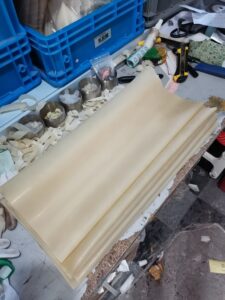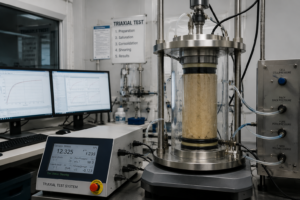
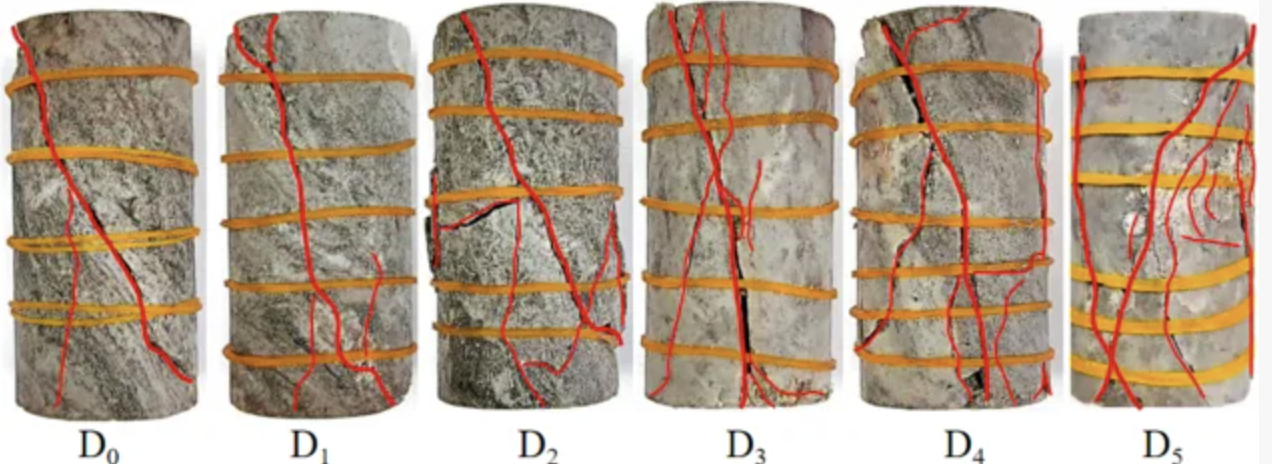
I’ve seen long halite creep programs go wrong in the quietest way: the rock creeps… and the membrane creeps too.
In long-term halite triaxial creep experiments, membrane creep can imitate real salt creep, biasing strain rates, volume change, and even “steady-state” interpretations—especially at high temperature and 10–30 MPa confinement.
Here’s how I separate the two and protect the data.
Distinguishing Salt Creep from Membrane Creep
If the curve drifts, the first question is simple: is it the specimen, or the boundary?
Salt creep is viscoplastic deformation of halite; membrane creep is time-dependent stretch/relaxation of the membrane under sustained σ₃ and temperature. Distinguish them using baselines, correlations, and repeatable boundary checks.
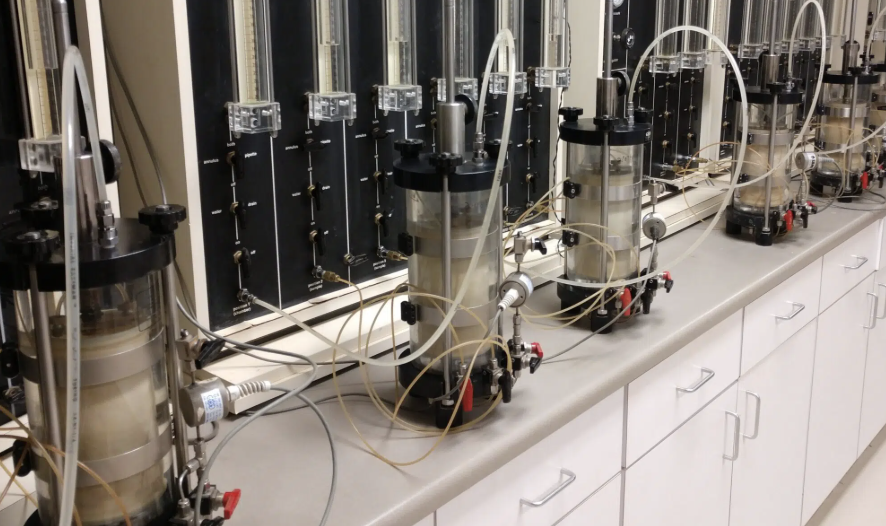
Halite creep is real and often large—that’s why we test it. But membranes are polymers, and polymers have their own time-dependent behaviour. Under sustained confining pressure, the membrane carries hoop tension. At elevated temperature, that tension relaxes and the material slowly stretches (or “sets”). In a 30–40 day test, that slow membrane deformation can show up as an extra component in your measured deformation—especially if you are relying on external displacement, controller-based volume readings, or indirect geometric assumptions.
So how do I tell what’s what?
1) Look for correlation with temperature or pressure steps
If drift accelerates right after a small temperature swing or a σ₃ step—even when axial stress is stable—I suspect membrane/system response.
2) Compare multiple instrumentation paths
If internal LVDTs (on the specimen) show a different trend than external frame displacement, boundary creep is a suspect.
3) Run a dummy-cylinder baseline
This is my favourite. Mount the same membrane on a smooth dummy cylinder, apply the same σ₃ and temperature window, and watch the system drift. Any “deformation” you see here is not salt. It’s membrane + plumbing + fixture compliance.
4) Watch for late-stage sealing changes
Micro-leaks or seal relaxation can look like creep drift, especially in pore pressure and volume controllers.
I keep a simple decision map on my desk: salt vs membrane drift map.
| Clue | More likely salt creep | More likely membrane/system creep |
|---|---|---|
| Trend follows deviator stress | ✓ | Sometimes |
| Trend follows temperature swings | Rare | ✓ |
| Appears in dummy baseline | No | ✓ |
| Changes after re-mounting | No | ✓ |
Time-Dependent Deformation of Latex Membranes
Latex is elastic, but not perfectly elastic. Time changes the response.
Latex membranes exhibit viscoelastic creep and stress relaxation under sustained hoop tension; higher temperature and longer duration increase permanent set, stiffness drift, and sealing instability risk.
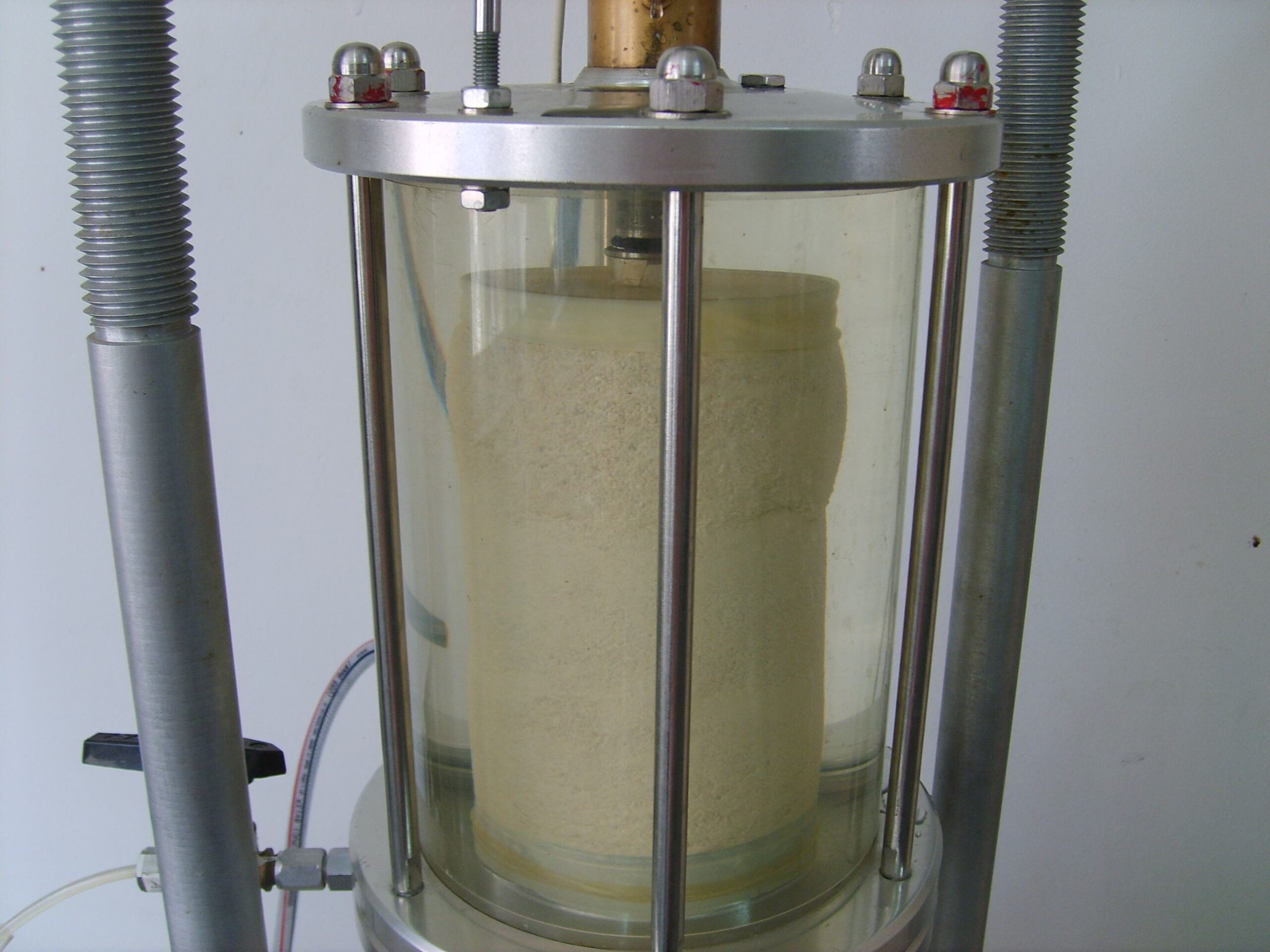
Latex behaves like a spring mixed with honey. Load it quickly and it snaps back. Hold it under stress for weeks and it slowly gives way. In halite testing, the membrane is loaded in a very specific way: it is pressed against the specimen under σ₃, stretched around the specimen (hoop strain), and forced to adapt as the specimen creeps and changes shape.
Over time, several things can happen:
- Stress relaxation: the membrane’s internal stress decreases even if the geometry stays similar. This can reduce clamping force near seals and O-rings.
- Creep / permanent set: the membrane slowly elongates or stretches, changing how it fits, especially around end regions.
- Property drift: elasticity and surface behaviour can shift with thermal aging (becoming tacky, softer, or less resilient).
- Permeability change: in some conditions, long exposure can alter gas/fluid permeability, making the system harder to interpret.
This is why evaluating membranes only by “temperature rating” is risky. A membrane that behaves fine at 100°C for a 2-hour test can drift noticeably in a 40-day program. Time is the multiplier.
If you want a practical summary: membrane creep is usually slow, smooth, and sensitive to temperature and time. Salt creep can be large and stress-dependent. The danger is when the two are superimposed—your fitted creep parameters can shift without you noticing.
My quick log list: thickness, lot, mount vacuum, seal type, temperature profile, and any changes in surface feel. It’s boring—but it makes later interpretation defendable: membrane creep log template.
| Factor | Increases membrane creep risk | Why |
|---|---|---|
| Higher temperature | ✓ | accelerates viscoelastic flow |
| Longer duration | ✓ | allows permanent set to develop |
| Higher σ₃ | ✓ | increases hoop tension |
| Rough specimen surface | ✓ | increases local strain + penetration |
Implications for Long-Duration Laboratory Tests
Membrane creep doesn’t just add noise—it can change conclusions.
Membrane creep can bias apparent creep rates, shift “steady-state” timing, distort volume change interpretation, and reduce confining pressure integrity through long-term seal relaxation or micro-leaks.

In long halite creep experiments, we often care about rate laws, steady-state creep, transient behaviour, and thermo-mechanical coupling. The membrane can quietly affect all of these.
1) Apparent creep rate bias
If membrane creep adds a small monotonic drift, it can inflate measured strain rate—especially late in the test when salt creep rate may be low. That can make your model “too soft” or your steady-state rate too high.
2) Misidentified steady state
Many researchers look for a flattening or stabilisation in deformation rate. If membrane creep relaxes early and slows later, it can mimic a transition that you attribute to the rock.
3) Volume change and permeability interpretation
Controller-based volume measurements are especially sensitive. Membrane creep plus thermal expansion can look like real volumetric creep, which can mislead interpretations of dilatancy or compaction in salt.
4) Seal integrity drift
A big risk is not rupture, but relaxation: seals that were perfect on day one become slightly less tight on day 20. You may see subtle pore pressure drift or increased permeability of the boundary system. That affects “confining pressure integrity”—the exact thing you need stable in a creep program.
The cost of getting this wrong is painful: weeks of conditioning and data collection become difficult to defend. That’s why many advanced labs treat membrane selection and baseline checks as part of experimental design.
I keep a small red-flag list for long tests: long-duration warning signs.
| Risk | What it looks like | Why it matters |
|---|---|---|
| Hidden drift | smooth extra strain | wrong creep parameters |
| Seal relaxation | tiny pressure loss | invalid boundary condition |
| Baseline mismatch | dummy drift ignored | false confidence |
Minimising Membrane-Related Bias in Creep Analysis
You can’t eliminate membrane behaviour—but you can make it measurable and small.
Use baseline runs, stable temperature control, robust membrane selection, careful sealing design, and multi-sensor cross-checks to isolate salt creep from membrane creep.
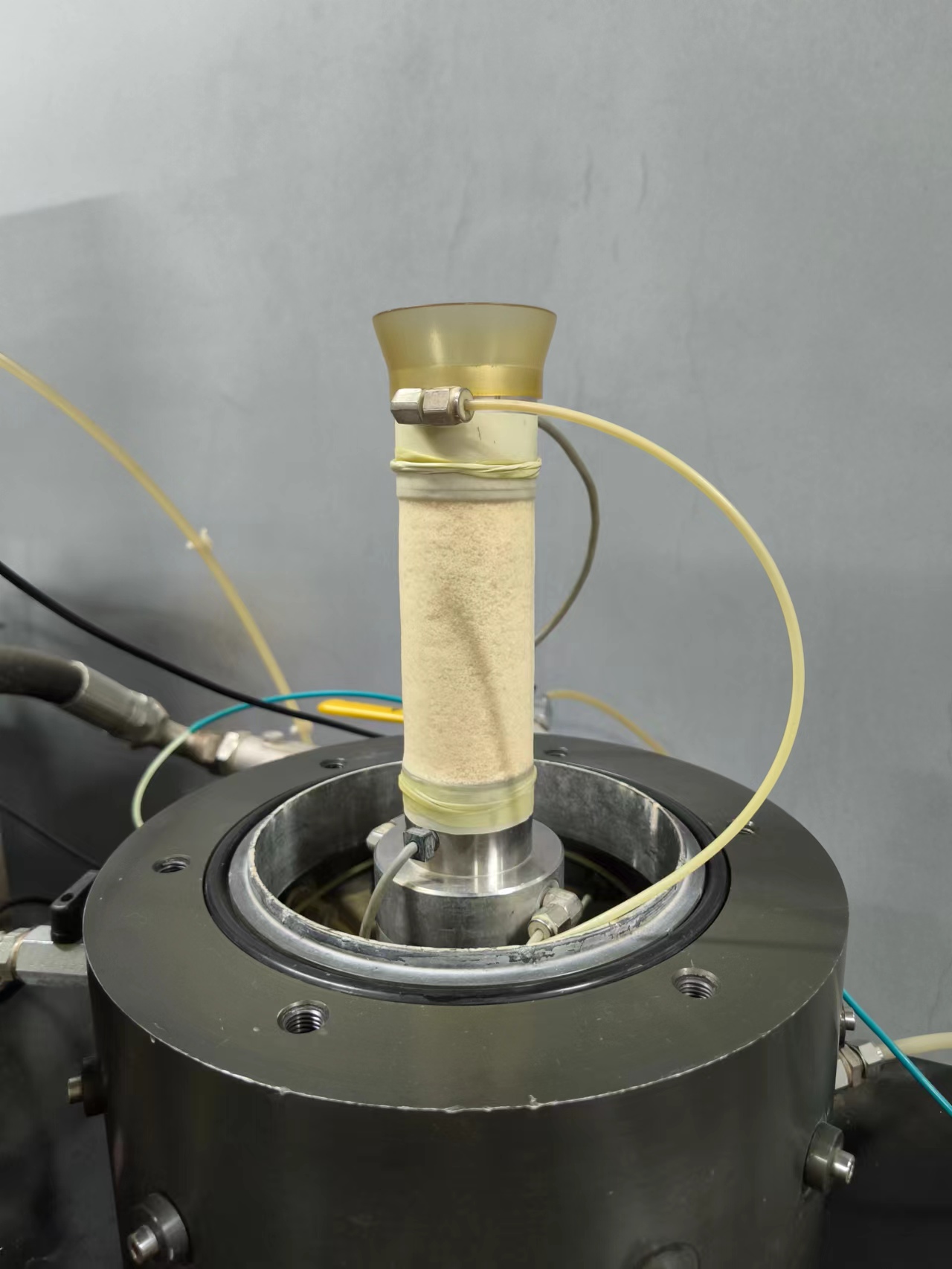
Here’s the playbook I recommend when the experiment is expensive and long:
1) Baseline your system
Run a dummy-cylinder hold using the same membrane, seals, σ₃ schedule, and temperature window. This gives you a drift fingerprint to compare or correct. It’s the fastest way to separate “system creep” from rock creep: baseline SOP).
2) Control temperature aggressively
Even small day/night swings can create fake trends. Log temperature continuously and keep the cell away from HVAC blasts, sunlight, and door cycles.
3) Choose membranes by duration, not only temperature
For short high-temp tests, chlorinated latex can be practical. For long creep near 100°C, many labs move toward silicone for thermal stability. If latex must be used, consider a slightly more robust wall and tighter thickness tolerance so behaviour is consistent.
4) Protect sealing zones
Use consistent O-rings, clean seating surfaces, and a repeatable clamp procedure. Re-check seals at low pressure before committing to long holds.
5) Use multiple measurement paths
If possible, pair internal deformation measurement with external displacement. When curves diverge, boundary creep is often the reason.
This is also where membrane specialists naturally help. At HOWDY, we focus on stable thickness control, consistent lots, and custom dimensions—because long tests punish inconsistency. Even if you end up choosing a non-latex membrane for very high-temperature creep, we can still help you with sizing discipline, sealing geometry, and baseline planning so the boundary stays quiet: HOWDY membrane support
| Action | Reduces bias by | Best for |
|---|---|---|
| Dummy baseline | separating system drift | 30–40 day tests |
| Tight thickness tolerance | repeatability | comparative studies |
| Temperature stability | removing “breathing” | thermo-mechanical work |
| Seal discipline | preventing micro-leaks | high σ₃ programs |
Conclusion
In long halite creep experiments, membrane creep can quietly imitate salt creep—baseline it, control temperature, and choose membranes like a core part of the method, not a consumable.