
I once saw two similar soil samples produce surprisingly different curves. The hidden cause was not the soil—it was the membrane.
Latex membranes affect radial restraint, confining pressure transfer, volume change, pore pressure, and measured strength. Correct size, thickness, stiffness, and mounting are essential for accurate triaxial test results.
Let’s uncover the small membrane effects that can quietly create large measurement errors.
Why Are Latex Membranes More Than Just Protective Covers?
A latex membrane seals the specimen, but it also stretches, resists deformation, and interacts directly with the soil surface.
In triaxial testing, a latex membrane acts as both a sealing layer and a mechanical boundary that influences stress transfer, radial strain, drainage, and specimen deformation.
When I first learned about triaxial testing, I thought the membrane had one simple job: keep the cell fluid away from the soil. That is true—but it is only part of the story.
The membrane is always in direct contact with the specimen. As cell pressure increases, it presses against the soil surface and stretches around the sample. This creates hoop tension, which means the membrane adds a small amount of radial restraint that is not shown directly on the pressure controller.
That extra restraint may be small, but it can matter when testing:
- very soft clay;
- dense sand with strong dilation;
- small-diameter specimens;
- samples under high confining pressure;
- long-duration creep specimens;
- materials requiring highly accurate volume measurements.
The membrane also forms part of the sealing system. It must remain secure around the top cap, base pedestal, and O-rings. A tiny pinhole or weak sealing area may cause pore pressure drift, incomplete saturation, or loss of effective confining pressure.
Then there is the soil surface itself. In granular specimens, the membrane may press into gaps between particles. This is known as the membrane penetration effect. The volume controller may record this local movement as soil compression, even though part of the measured change comes from membrane deformation.
That is why I never describe a membrane as a passive cover. It is part of the test boundary, and every boundary has an influence.
A useful starting point is to review the full triaxial boundary system, including the membrane, porous stones, end caps, O-rings, drainage lines, and measurement devices.
| Membrane function | Possible influence on testing |
|---|---|
| Separates soil from cell fluid | Maintains specimen isolation |
| Transfers confining pressure | May add radial restraint |
| Seals the specimen | Affects pore pressure stability |
| Follows soil deformation | Influences strain and volume readings |
| Contacts surface voids | Can cause membrane penetration |
The important question is not whether the membrane has an effect. It always does. The real question is whether that effect is small, stable, and properly controlled.
How Do Membrane Effects Influence Stress–Strain Behaviour and Volume Measurements?
Membrane stiffness, stretching, wrinkles, and penetration can all change how the specimen appears to deform under load.
Membrane effects can increase apparent soil strength, alter stress–strain curves, exaggerate contraction, hide dilation, and introduce errors into pore pressure and volume change measurements.
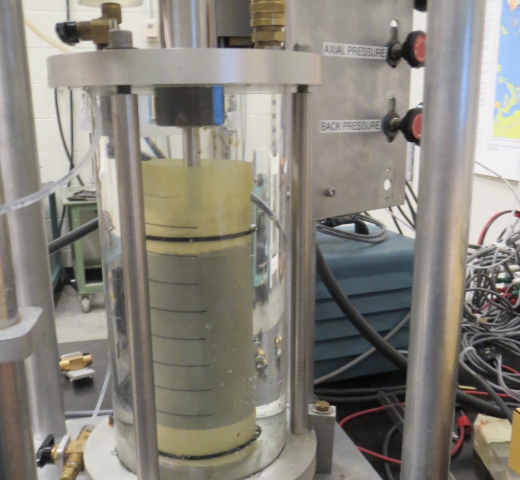
I once reviewed a CD test where the volume curve rose and fell slightly during pressure stages. At first glance, it looked like unusual soil behaviour. The actual cause was much simpler: a small membrane fold near the base was compressing and expanding like a tiny pocket.
This is why membrane-related errors are dangerous. They often look reasonable.
Added radial restraint
A membrane with greater thickness or stiffness resists radial expansion. When the specimen tries to bulge or dilate, the membrane pushes back.
This can cause:
- a steeper apparent stress–strain response;
- a slightly higher measured peak strength;
- delayed radial deformation;
- reduced apparent dilation;
- changes in the effective stress path.
The influence is often more noticeable in soft soils and large-strain tests because these specimens depend heavily on free radial deformation.
Membrane penetration
In sand or coarse granular soil, confining pressure pushes the membrane into surface voids between particles. The volume control system may record this as specimen contraction.
As a result:
- contraction may appear larger than it really is;
- true dilation may be partly hidden;
- compressibility may be overestimated;
- early consolidation behaviour may be misread.
You can learn more from this membrane penetration guide.
Wrinkles and trapped pockets
An oversized or poorly mounted membrane can form folds. These folds may trap small amounts of cell fluid or air. During pressure changes, the folds flatten or expand, producing false volume readings.
Leakage and pore pressure errors
In CU testing, a pinhole or weak seal may prevent the specimen from reaching a reliable B-value. It may also cause slow pore pressure loss during shearing.
| Membrane issue | Possible test symptom | Interpretation risk |
|---|---|---|
| Excessive stiffness | Higher apparent peak stress | Soil appears stronger |
| Membrane penetration | Extra measured contraction | Soil appears more compressible |
| Wrinkles | Irregular volume curve | False dilation or contraction |
| Micro-leak | Low or drifting pore pressure | Wrong effective stress path |
| Uneven thickness | Local restraint differences | Poor test repeatability |
The solution is not to remove the membrane effect completely—that is rarely possible. The solution is to make it consistent, understand it, and apply suitable corrections when test precision demands them.
Which Parameters Control Membrane Performance in Triaxial Testing?
A membrane’s behaviour depends on much more than its stated diameter. Material, thickness, stiffness, fit, temperature, and time all matter.
The main control parameters are membrane thickness, thickness tolerance, Young’s modulus, diameter fit, elasticity, surface condition, temperature, test duration, and confining pressure.
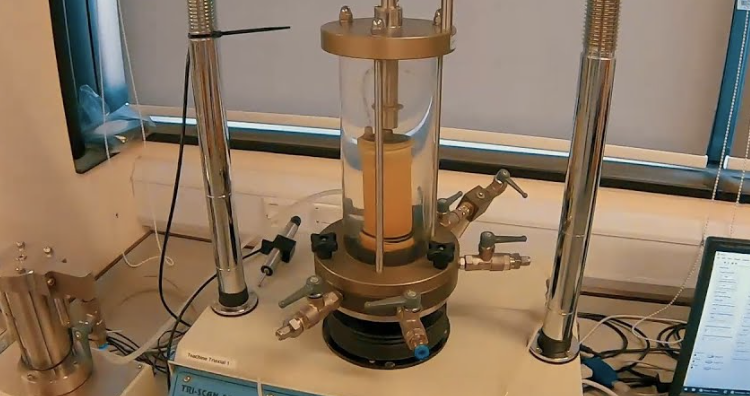
Whenever a customer asks me, “Which membrane should I use?”, I avoid giving an answer based only on sample diameter. Two membranes with the same diameter can behave very differently if their thickness, elasticity, or manufacturing quality is different.
Thickness and thickness tolerance
A thin membrane normally creates less radial restraint and follows soil deformation more easily. However, it may be more vulnerable to punctures, over-stretching, and leakage.
A thicker membrane is stronger and often easier to seal, but it can add more mechanical restraint.
Thickness consistency is equally important. If one section is thinner than another, the membrane will not stretch evenly. Thin areas may bulge or tear, while thick areas may resist specimen deformation.
For precision testing, I recommend checking membrane thickness at several points rather than measuring only one location. A useful procedure is available in this multi-point thickness inspection method.
Young’s modulus and elasticity
Young’s modulus describes stiffness, but latex is viscoelastic rather than perfectly linear. Its apparent stiffness may change with:
- strain level;
- loading speed;
- temperature;
- aging;
- exposure duration.
A membrane that feels soft during mounting may behave differently after several hours under pressure.
Diameter and fit
The membrane should fit the specimen closely without requiring excessive stretching.
If it is too small:
- the wall becomes thinner during mounting;
- hoop tension increases;
- tear risk rises;
- extra restraint may develop.
If it is too large:
- folds and wrinkles appear;
- trapped pockets can affect volume readings;
- seals may become less reliable.
Temperature and duration
Warm conditions can soften latex and increase creep. Long-duration tests may lead to stress relaxation, permanent deformation, or gradual changes in sealing force.
Surface and specimen type
Angular particles, rough rock surfaces, and sharp specimen edges increase puncture and penetration risk.
| Parameter | If too low or too small | If too high or too large |
|---|---|---|
| Thickness | Leaks, punctures, bulging | Extra radial restraint |
| Membrane diameter | Over-stretching and tearing | Wrinkles and false volume change |
| Stiffness | Excess deformation | Strength and dilation bias |
| Elastic recovery | Loose fit after stretching | Difficult mounting if too stiff |
| Surface smoothness | Friction and damage | Usually improves handling |
I treat these parameters as a connected system. Changing one often changes another. A thicker membrane may improve durability, but it may also require a different diameter or elasticity level to maintain good fit.
How Can High-Precision Latex Membrane Selection Improve Test Reliability?
Reliable testing starts with selecting a membrane that matches the specimen, pressure, duration, soil type, and required measurement accuracy.
High-precision latex membranes improve repeatability through controlled thickness, accurate sizing, stable elasticity, smooth surfaces, reliable sealing, and batch-to-batch manufacturing consistency.
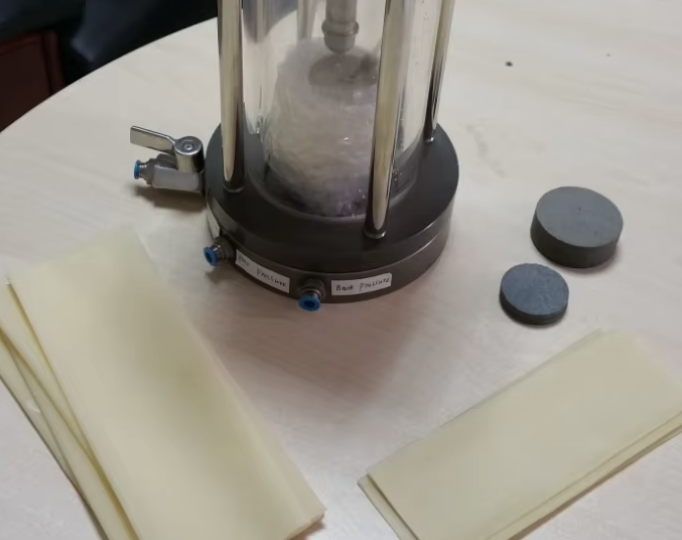
For routine teaching demonstrations, a basic membrane may be enough. For research, engineering design, or long-term testing, I look much more closely at manufacturing quality.
Here is the selection process I normally recommend.
1. Match the membrane to the specimen
Confirm:
- actual specimen diameter;
- specimen length;
- surface roughness;
- maximum expected radial strain;
- cap and pedestal dimensions.
Do not rely only on the nominal sample size. A specimen described as 100 mm may actually measure 101 or 102 mm after preparation.
2. Match thickness to the test conditions
For soft clay and sensitive CD tests, a thinner membrane may reduce restraint and protect volume measurement accuracy.
For angular sand, rock, high confining pressure, or long-duration testing, a stronger wall may reduce puncture and delayed failure risk.
3. Request tolerance information
For high-precision work, ask the supplier about:
- thickness tolerance;
- diameter tolerance;
- wall consistency along the full length;
- surface defects;
- pinhole inspection;
- batch traceability.
4. Inspect before mounting
A simple visual and dimensional inspection can prevent hours of lost testing.
Check for:
- thin spots;
- bubbles;
- cracks;
- tacky areas;
- uneven edges;
- local diameter changes.
5. Run a system baseline
Mount the membrane on a smooth dummy specimen and apply the planned pressure schedule. This helps identify system volume drift, membrane creep, and thermal effects before testing valuable soil samples. A practical process is available in this dummy specimen calibration procedure.
This is also where experienced membrane specialists can provide real value.
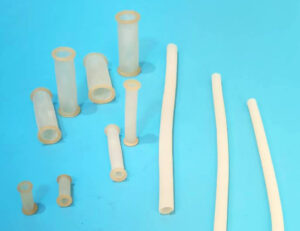
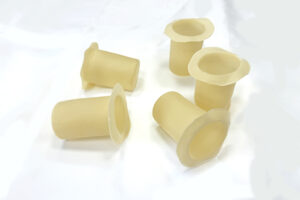
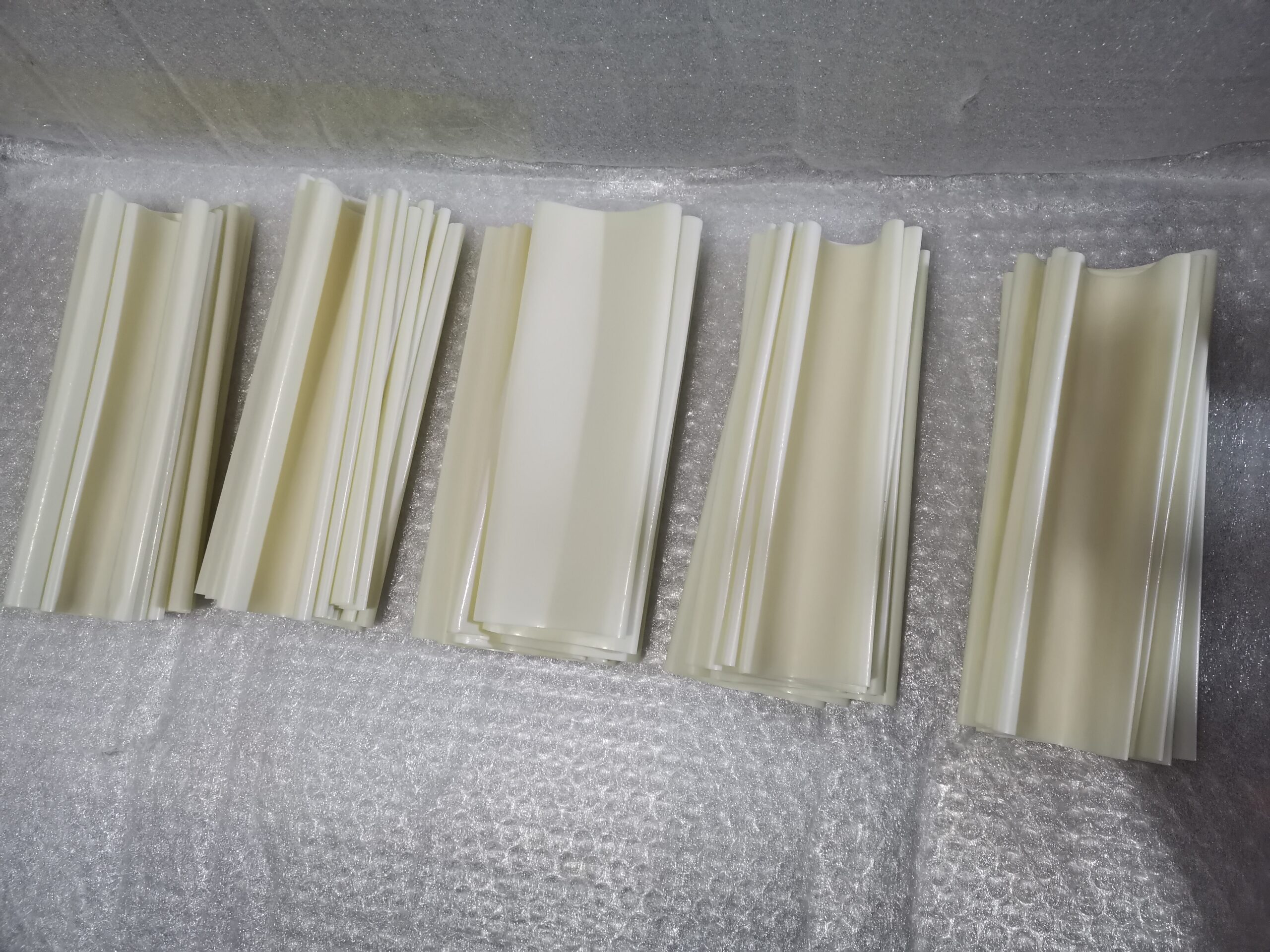
At HOWDY, we manufacture latex membranes specifically for laboratory and industrial testing rather than treating them as generic rubber tubes. Our quality process focuses on:
- controlled wall thickness;
- multi-point dimensional inspection;
- stable diameter and length;
- consistent elasticity;
- smooth, clean surfaces;
- standard and custom membrane sizes;
- large-diameter manufacturing capability;
- transparent and chlorinated membrane options.
Our design team can also develop special membrane shapes for unusual triaxial cells, rock specimens, ports, flanged ends, and non-standard research equipment.
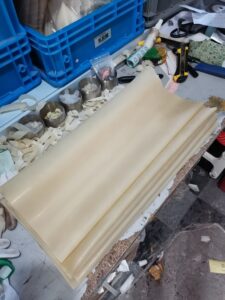
For larger projects, thickness consistency becomes even more difficult. Our experience producing an extra-large Ø600 × 1500 mm membrane with a 2.5 mm wall has helped us develop stronger controls for dipping, curing, diameter uniformity, and full-length inspection.
| Test condition | Suggested selection focus |
|---|---|
| Routine UU testing | Reliable sealing and tear resistance |
| Precision CU testing | Stable thickness and low leakage |
| Sensitive CD testing | Low restraint and wrinkle-free fit |
| Coarse or angular soil | Puncture resistance |
| Long-duration testing | Creep stability and consistent material |
| Large specimens | Diameter and full-length thickness uniformity |
A cheaper membrane may save a small amount at purchase. A failed or biased test can waste technician time, machine availability, prepared specimens, and weeks of research.
That is why I always measure cost by valid test results, not by membrane price alone. For help reviewing your test conditions, use our HOWDY membrane selection support.
Conclusion
A latex membrane is part of the measuring system. Control its fit, thickness, stiffness, and quality to protect every result.