I have learned that unusual tests usually need unusual solutions. A standard membrane cannot solve every laboratory challenge.
Custom latex membranes help advanced triaxial laboratories overcome limitations caused by unusual specimen sizes, high pressure conditions, special equipment designs, and complex testing requirements.
The right membrane is not always the one on the shelf. Sometimes it is the one designed for the experiment.
Why Can Standard Latex Membranes Not Meet Every Triaxial Testing Requirement?
Standard membranes work well for common tests, but advanced research often creates new challenges.
Standard latex membranes are limited by fixed diameters, lengths, thicknesses, and shapes, making custom designs necessary for special specimens, large-scale testing, and unique triaxial equipment.
When laboratories start with common soil testing, standard membranes are usually enough. A 38 mm, 50 mm, 70 mm, or 100 mm specimen can often use an available size without problems.
But research does not always follow standard conditions.
Over the years, I have seen laboratories face many situations where a normal membrane simply does not fit:
- large rock specimens;
- oversized soil columns;
- special calibration chambers;
- custom triaxial cells;
- high-pressure testing systems;
- long-term creep experiments;
- temperature-controlled tests.
The problem is not only size.
A membrane that is slightly wrong can create several issues:
Poor fitting
If the diameter is too large, wrinkles appear. These wrinkles can affect volume measurement and create unstable boundary conditions.
If the diameter is too small, excessive stretching occurs. This increases membrane stress and may lead to premature failure.
Incorrect thickness
A standard thickness may not be suitable for every application.
A very thin membrane may provide better deformation sensitivity but has higher risk under:
- sharp particles;
- high confining pressure;
- long-duration loading.
A thicker membrane improves durability but may introduce additional stiffness effects.
Special equipment requirements
Some advanced systems require:
- extended length;
- reinforced ends;
- special sealing areas;
- non-standard shapes;
- custom openings.
In these cases, forcing a standard membrane to fit often creates more problems than solutions.
This is why I always tell laboratories: the membrane should match the experiment, not the other way around.
A custom membrane is not about making something unusual. It is about removing unnecessary uncertainty from the testing system.
A simple comparison:
| Standard Membrane | Custom Latex Membrane |
|---|---|
| Fixed dimensions | Designed dimensions |
| Limited thickness options | Application-specific thickness |
| General testing | Advanced research conditions |
| Faster availability | Better equipment compatibility |
| Lower customization | Higher testing flexibility |
For laboratories with special requirements, I usually recommend starting with a design discussion: custom membrane evaluation.
Which Custom Design Parameters Can Be Adjusted?
Custom membranes are not only about diameter. Every dimension can influence testing performance.
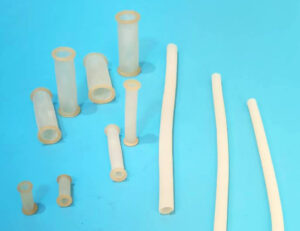
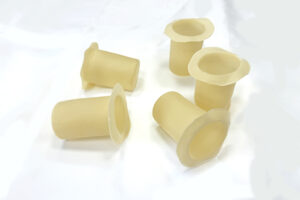
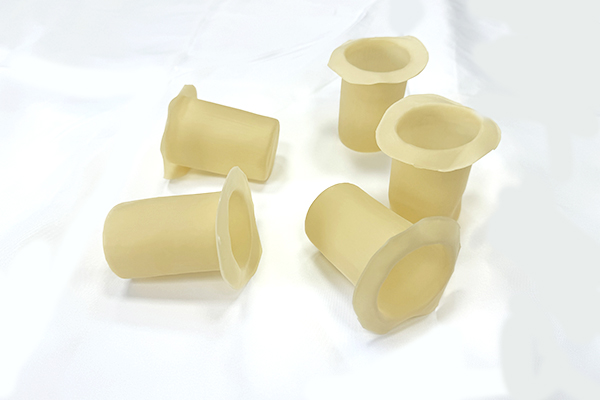
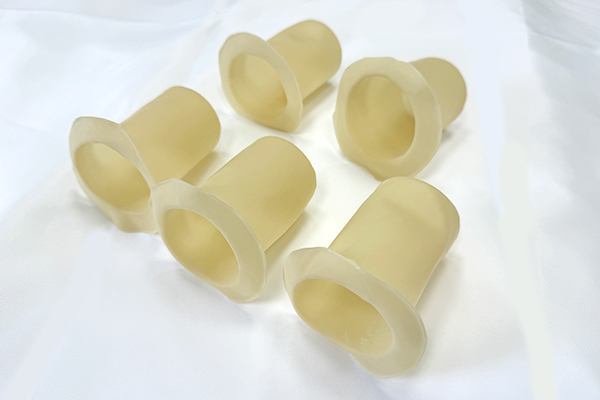
Diameter, length, thickness, elasticity, and shape design can be adjusted to match specimen geometry, pressure conditions, and specific triaxial equipment requirements.
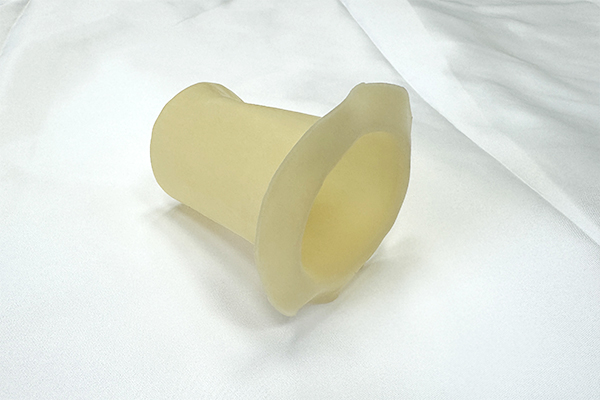
When designing a custom latex membrane, I normally look at four major parameters first.
1. Diameter
Diameter is the foundation of membrane selection.
The membrane must fit the specimen correctly.
A good diameter provides:
- smooth installation;
- stable sealing;
- controlled stretching;
- reduced wrinkling.
For non-standard specimens, diameter may need to be customized beyond common laboratory sizes.
Examples include:
- large rock cores;
- calibration chamber models;
- large soil columns;
- special geotechnical research specimens.
2. Length
Length is often underestimated.
A membrane that is too short may not cover the specimen properly. A membrane that is too long may create unnecessary folds or installation difficulty.
Custom length helps laboratories optimize:
- sealing position;
- drainage area;
- specimen coverage;
- mounting process.
3. Thickness
Thickness is one of the most important performance factors.
The selection depends on:
- confining pressure;
- specimen roughness;
- test duration;
- deformation level;
- required accuracy.
For example:
| Application | Typical Priority |
|---|---|
| Soft soil testing | Flexibility |
| Sand testing | Tear resistance |
| Rock testing | Durability |
| Long-term creep | Stability |
| High pressure | Strength |
4. Shape Flexibility
Some advanced systems require more than a simple tube shape.
Custom designs may include:
- different end structures;
- reinforced areas;
- special sealing zones;
- unique geometries.
This is especially important when the membrane must work together with a special triaxial cell design.
A successful custom membrane is not just a larger version of a standard product. It is an engineered component designed around the testing system.
A useful design checklist can be found here: latex membrane design parameters.
| Design Factor | Main Purpose |
|---|---|
| Diameter | Correct specimen fit |
| Length | Better installation and sealing |
| Thickness | Balance strength and sensitivity |
| Shape | Match special equipment |
What Manufacturing Challenges Exist Behind High-Performance Custom Latex Membranes?
Making a custom membrane requires more than changing dimensions. Large and special membranes require careful process control.
High-performance custom latex membranes require precise mould design, stable latex processing, controlled curing, thickness monitoring, and dimensional inspection throughout production.
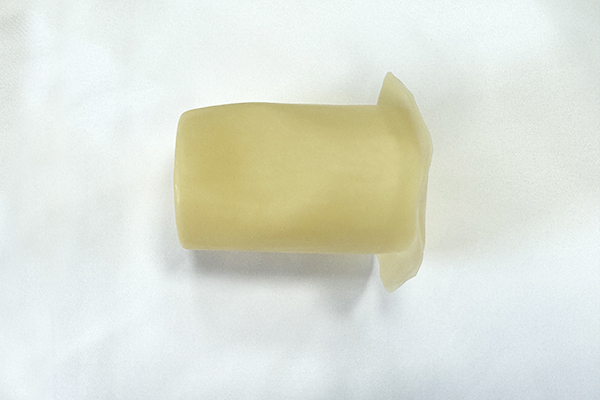
Many people think custom manufacturing means simply making a bigger product.
In reality, larger and more complex membranes introduce new technical challenges.
1. Maintaining diameter uniformity
For small membranes, minor variation may be acceptable.
For large membranes, even small changes can create:
- uneven stretching;
- sealing problems;
- local stress concentration;
- inconsistent test conditions.
The mould or mandrel accuracy becomes extremely important.
2. Controlling thickness distribution
Latex production is sensitive to:
- material viscosity;
- dipping speed;
- curing temperature;
- environmental conditions.
A small production change can affect wall thickness.
For high-precision applications, manufacturers need to check thickness at multiple locations instead of relying on one measurement.
3. Managing large-size deformation
Large membranes have more surface area. During production and handling, they are more sensitive to:
- gravity;
- stretching;
- storage conditions;
- transportation stress.
4. Ensuring repeatability
A research laboratory may need dozens or hundreds of membranes with identical performance.
Therefore, production consistency becomes as important as the first sample.
This is where experienced membrane manufacturers create value.
At HOWDY, we understand that custom latex membranes are not simple rubber products. They are precision components used inside measurement systems.
Our approach focuses on:
- controlled latex processing;
- stable thickness control;
- diameter consistency;
- custom size development;
- large membrane manufacturing experience;
- inspection before shipment.
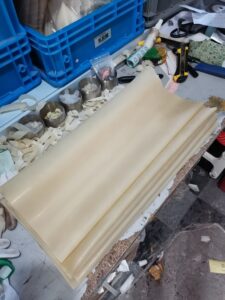
We have developed large-format membranes, including Ø600 × 1500 mm membranes with 2.5 mm thickness, which require much stronger process control than standard laboratory sizes.
For advanced projects, the manufacturing process itself becomes part of test reliability.
More information can be added here: HOWDY custom membrane capability.
| Manufacturing Challenge | Quality Control Focus |
|---|---|
| Large diameter | Mould accuracy |
| Long length | Full-length inspection |
| Thin walls | Thickness monitoring |
| Custom shapes | Design validation |
| Repeat orders | Batch consistency |
How Do Custom Latex Membranes Improve Advanced Triaxial Testing?
Custom membranes solve practical problems that standard products cannot handle.
By matching membrane design to specimen geometry and test conditions, custom latex membranes improve sealing reliability, reduce boundary effects, and support more accurate laboratory results.
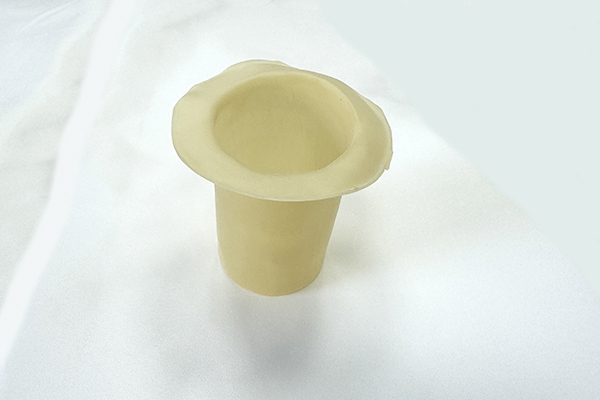
The real value of a custom membrane is not the membrane itself.
The value is the improvement it brings to the entire testing process.
Here are several examples where custom membranes make a difference.
Large-Diameter Rock Testing
Rock mechanics laboratories often work with specimens much larger than standard soil samples.
A standard membrane may not provide:
- enough coverage;
- correct diameter;
- reliable sealing.
A custom membrane allows the laboratory to maintain proper boundary conditions.
Long-Term Creep Experiments
In creep testing, the specimen may deform for weeks or months.
The membrane must maintain:
- elasticity;
- sealing force;
- dimensional stability.
Custom thickness and material selection help reduce long-term uncertainty.
High-Pressure Testing
Higher confining pressure creates greater membrane stress.
Custom membranes can be designed with:
- stronger wall thickness;
- better tear resistance;
- improved dimensional stability.
Special Research Equipment
Universities and research institutes often develop their own testing devices.
These systems may require unique membrane geometry.
Instead of modifying the equipment around a standard membrane, a custom membrane allows the component to match the experiment.
This is why membrane specialists are becoming more important in advanced geotechnical research.
At HOWDY, we work with laboratories, universities, and equipment manufacturers that need more than standard sizes.
Our role is not only manufacturing. We help customers consider:
- specimen dimensions;
- pressure conditions;
- testing duration;
- sealing methods;
- material requirements.
A good custom membrane should disappear during the test. It should support accurate measurement without becoming the source of uncertainty.
For special applications, you can discuss your requirements here: HOWDY technical support.
| Application | Custom Advantage |
|---|---|
| Large rock specimens | Better fit and sealing |
| High pressure tests | Improved durability |
| Long creep tests | Better stability |
| Special cells | Compatible geometry |
| Research projects | Application-specific design |
Conclusion
Custom latex membranes help advanced laboratories overcome size, pressure, and design challenges while improving triaxial testing accuracy and reliability.