I used to think latex membranes belonged mainly in laboratories. Then one unusual customer request changed the way I saw them.
Latex membranes are not limited to triaxial testing. Their flexibility, elasticity, sealing ability, and custom design potential make them valuable in many industries beyond geotechnical research.
Sometimes, the most interesting ideas come from unexpected places.
Why Are Latex Membranes More Versatile Than Most People Think?
Most people connect latex membranes with soil testing, but the material has much wider possibilities.
Because latex combines elasticity, softness, sealing performance, and custom manufacturability, it can solve problems in many industries where flexible and reliable membranes are needed.
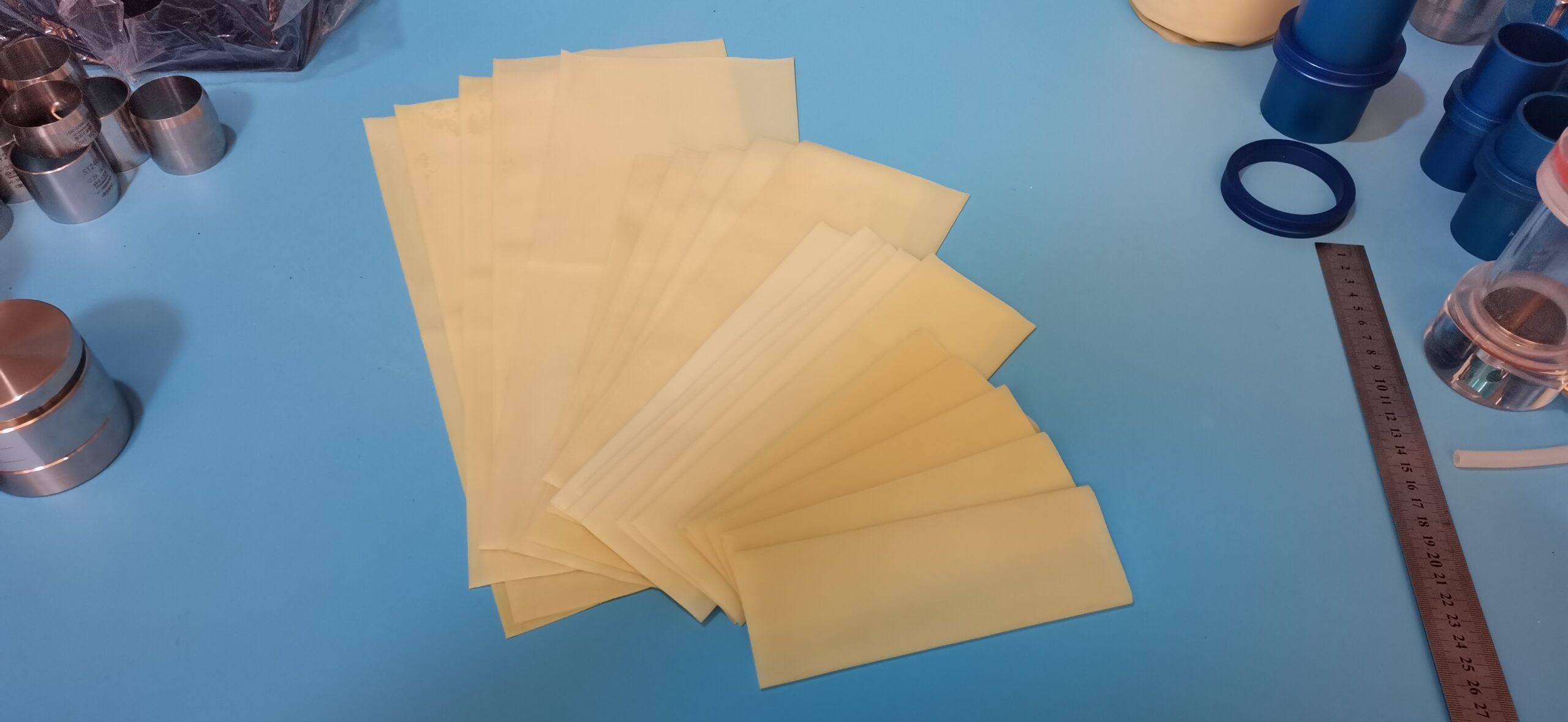
When people hear “latex membrane,” they usually imagine a triaxial testing laboratory.
A transparent membrane around a soil specimen.
A pressure cell.
A research engineer recording stress–strain curves.
That is where we started. But after years working with latex products, I realized something important:
The value of latex is not the application. The value is the material behaviour.
Latex has several unique characteristics:
- excellent elasticity;
- high stretch recovery;
- soft surface contact;
- good sealing ability;
- lightweight structure;
- easy customization.
These properties make it useful anywhere a product needs to expand, contract, seal, protect, or adapt to changing conditions.
For example, in laboratory testing, the membrane must follow soil deformation without easily tearing. In other industries, the same principle applies:
- a flexible cover needs to follow movement;
- a sealing layer needs to maintain contact;
- a protective membrane needs to survive repeated stretching.
The common requirement is not the industry. It is the problem.
I often compare latex membranes to a good pair of gloves. The glove is not valuable because it is “a glove.” It is valuable because it protects while allowing movement and sensitivity.
The same idea applies to engineered latex membranes.
Of course, not every application should use latex. Material selection depends on:
- temperature;
- chemical exposure;
- pressure;
- required lifespan;
- mechanical stress.
But when flexibility and custom shaping matter, latex remains a very interesting option.
This is why we always start with the customer’s challenge rather than a product catalogue.
The first question is not:
“Which standard size do you need?”
The better question is:
“What problem are you trying to solve?”
A simple material comparison:
| Property | Why It Matters |
|---|---|
| Elasticity | Allows repeated stretching |
| Recovery | Maintains original shape |
| Softness | Protects contact surfaces |
| Sealing ability | Prevents leakage |
| Custom forming | Supports special designs |
For more about material selection thinking, I usually recommend this latex application evaluation guide.
How Did a Sailboat Customer Lead Us From Triaxial Testing to Sailing?
One unexpected customer request showed us that latex membrane expertise could travel beyond the laboratory.
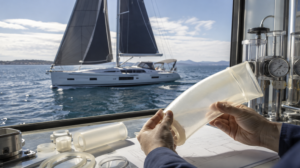
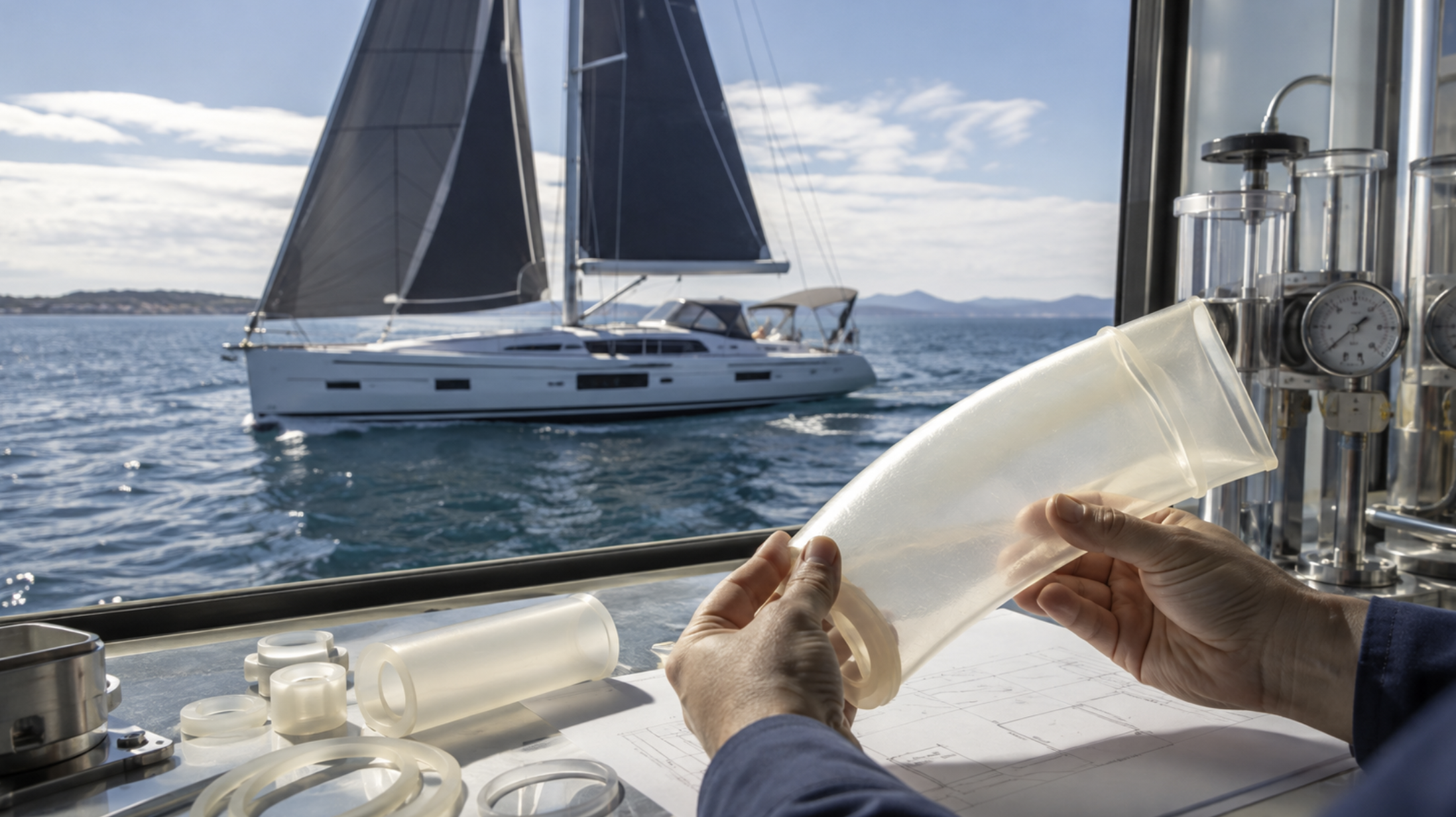
A customer from the sailing industry approached us for a flexible latex solution, and this experience helped us understand that membrane engineering principles apply far beyond soil testing.

I still remember when the enquiry arrived.
At first glance, it looked different from everything we normally handled.
Most of our customers were:
- universities;
- geotechnical laboratories;
- testing equipment manufacturers;
- research institutions.
Then came a request connected with a sailboat application.
My first reaction was curiosity.
“Why would a sailing customer need a latex membrane?”
But after discussing the project, the logic became clear.
The customer was not looking for a “latex membrane” because of the name. They needed a material solution with specific characteristics:
- flexibility;
- water resistance;
- reliable sealing;
- ability to adapt to movement;
- custom dimensions.
Those are exactly the same reasons laboratories use latex membranes.
In triaxial testing, the membrane must move with the specimen while maintaining a stable boundary.
On a sailboat, flexible components may also experience:
- continuous movement;
- changing tension;
- environmental exposure;
- repeated deformation.
The application was different. The engineering requirement was surprisingly similar.
That project changed our perspective.
Before, we mainly thought about latex membranes from the viewpoint of testing equipment.
After that experience, we started asking a broader question:
“Where else does the world need a flexible, reliable, custom-made membrane?”
This mindset is important because many customers do not know the exact product they need. They only know the problem.
A customer may say:
“I need something flexible but strong.”
“I need a part that seals but still moves.”
“I need a special shape that nobody sells.”
That is where engineering begins.
A standard catalogue rarely solves every challenge.
A custom solution often starts with a conversation.
You can read more about our custom development approach here: custom latex engineering process.
| Customer Need | Latex Advantage |
|---|---|
| Flexible movement | High elasticity |
| Repeated deformation | Recovery performance |
| Water contact | Sealing capability |
| Special dimensions | Custom manufacturing |
| Unique equipment | Design adaptation |
Which Other Industries Can Benefit From Custom Latex Membranes?
The sailing project opened our eyes to many possible applications beyond traditional laboratory testing.
Industries requiring flexible, elastic, and custom-shaped components can benefit from latex membrane solutions, including marine, industrial, medical research, and specialized equipment applications.
After that experience, I started looking differently at customer enquiries.
Instead of asking:
“Is this a triaxial membrane project?”
I started asking:
“Does this application need the unique properties of latex?”
Several industries may benefit from custom latex solutions.
Marine Applications
Marine environments often require materials that can handle:
- water exposure;
- movement;
- repeated stress;
- flexible sealing.
The sailing customer helped us understand this connection.
Laboratory and Scientific Equipment
This remains our core field.
Applications include:
- triaxial testing;
- rock mechanics;
- soil testing;
- calibration systems;
- research equipment.
Here, accuracy is the priority.
Industrial Sealing Systems
Some industrial equipment requires flexible sealing elements that can maintain contact during movement.
Latex can be considered when the conditions match its performance range.
Custom Research Projects
Universities and engineering companies often create unique experimental equipment.
These projects rarely fit standard products.
They may require:
- unusual diameter;
- special length;
- different thickness;
- custom geometry.
This is where custom manufacturing becomes valuable.
However, I always tell customers: latex is not a magic material.
The correct material depends on:
- operating temperature;
- chemical environment;
- pressure level;
- expected service life.
Good engineering starts with understanding limitations, not only advantages.
A responsible supplier should sometimes say:
“Latex is not the best choice here.”
That honesty creates better long-term partnerships.
Our role is not simply to sell membranes. It is to help customers find the right solution.
A useful way to think about applications:
| Requirement | Possible Latex Benefit |
|---|---|
| Flexible movement | Elastic response |
| Custom shape | Manufacturing flexibility |
| Soft contact | Reduced surface damage |
| Repeated use | Recovery ability |
| Sealing | Stable contact |
Why Does Custom Engineering Matter More Than Standard Products?
A standard product can solve common problems. Engineering solves unusual ones.
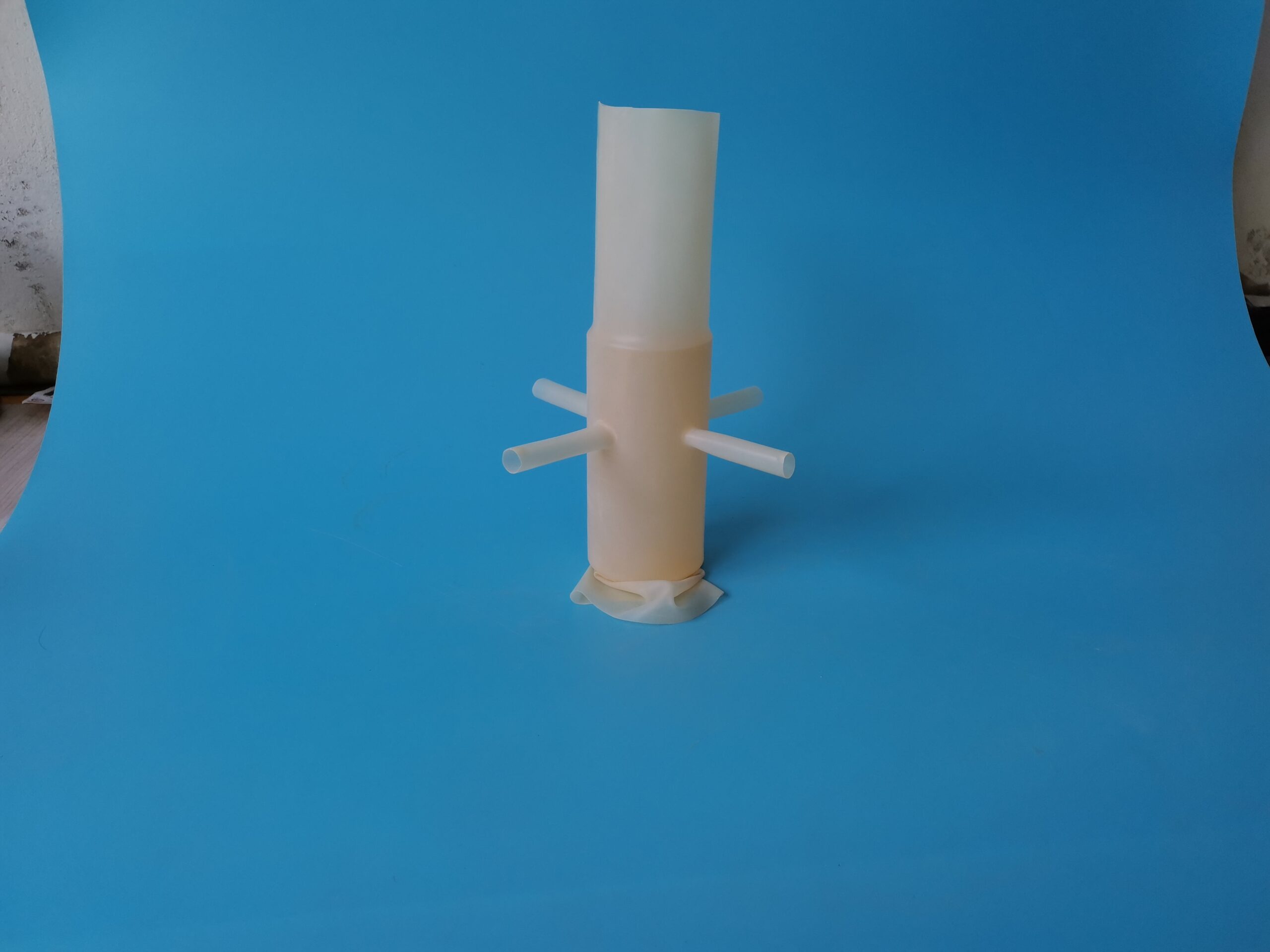
Custom latex membrane development allows manufacturers to adjust dimensions, thickness, material properties, and design details according to the real working conditions of each application.
I have learned one important lesson from working with different customers:
The hardest projects are rarely difficult because of the material.
They are difficult because the requirements are unique.
A standard membrane is designed for average conditions.
But real applications are not always average.
A customer may need:
- a diameter that does not exist in catalogues;
- a length beyond normal production;
- a special thickness balance;
- better sealing around a custom structure;
- improved durability for repeated loading.
These requirements cannot always be solved by choosing another standard size.
They require engineering.
At HOWDY, this is where our experience becomes valuable.
We focus on understanding:
- how the membrane will be used;
- what forces it will experience;
- what environment it will work in;
- what performance matters most.
Our custom development process includes:
- Understanding the application.
- Reviewing dimensions and conditions.
- Selecting suitable latex properties.
- Producing trial samples.
- Checking performance before mass production.
For example, our experience producing large latex membranes, including Ø600 × 1500 mm membranes with 2.5 mm thickness, required careful control of:
- diameter uniformity;
- thickness consistency;
- curing stability;
- handling strength.
Large membranes are a good example of why engineering matters. A small manufacturing variation that is invisible on a small product can become a major issue on a large one.
The future of latex membranes is not only about making more sizes.
It is about creating better solutions.
A customer does not usually come with a request for “a latex membrane.”
They come with a challenge.
Our job is to understand the challenge first.
For technical discussion, you can contact our team here: HOWDY custom membrane support.
| Standard Product | Custom Engineering |
|---|---|
| Fixed specifications | Application-based design |
| Faster availability | Optimised performance |
| General use | Specific requirements |
| Limited adjustment | Full design discussion |
Conclusion
A sailboat customer reminded us that latex membranes are not limited to laboratories—they are solutions waiting for the right application.