When membranes get big, “almost the same diameter” stops being good enough. Tiny variations turn into real headaches.
Diameter uniformity in large latex membranes controls sealing, wrinkle risk, and stress transfer. Better uniformity means fewer leaks, cleaner deformation, and more trustworthy data—especially in large-scale cells.
Let me explain it the practical way.
Why Diameter Uniformity Matters in Large Latex Membranes
On big membranes, a few millimetres can decide whether the membrane sits calm—or fights you the whole test.
Uniform diameter keeps contact pressure consistent, reduces folds, and stabilises boundary conditions, improving sealing reliability and measurement repeatability.
With small triaxial samples, we can “get away” with minor fit issues. The membrane stretches, we smooth it, and the test still runs. But once you move into large membranes—think hundreds of millimetres in diameter—the scale changes everything. A small diameter mismatch becomes a big circumference mismatch. And circumference mismatch becomes wrinkles, uneven tension, and sealing drama.
Here’s what diameter uniformity really controls in the lab:
- Sealing stability: if diameter drifts, the membrane can be loose in one zone and tight in another. That’s a recipe for micro-leaks near rings and ports.
- Wrinkle formation: oversize sections form folds that behave like tiny bladders. They can confuse volume-change signals and create “breathing” curves.
- Stress transfer: non-uniform tension changes radial restraint around the specimen. Your boundary condition becomes uneven, which can bias results in long-duration tests.
- Mounting time: nothing eats technician time like chasing a wrinkle that keeps reappearing.
I’ve watched a team spend an entire morning “fixing” a membrane that was slightly tapered. The soil didn’t change. The apparatus didn’t change. The fit did. And that changed everything.
So for large membranes, uniformity isn’t a luxury. It’s the foundation. My quick mental reminder: uniformity checklist.
| Problem | What causes it | What you see |
|---|---|---|
| Local looseness | Diameter too large in one section | Wrinkles, trapped air |
| Local tightness | Diameter too small in one section | Over-stretch, stress marks |
| Taper | Gradual diameter drift | Uneven seating, leak risk |
Manufacturing Challenges in Achieving Consistent Membrane Diameter
Large diameter means large surface area—and small process drift shows up fast.
Consistent diameter is hard because latex thickness, curing, gravity sag, mold precision, and handling tension all influence final geometry, especially over long lengths.
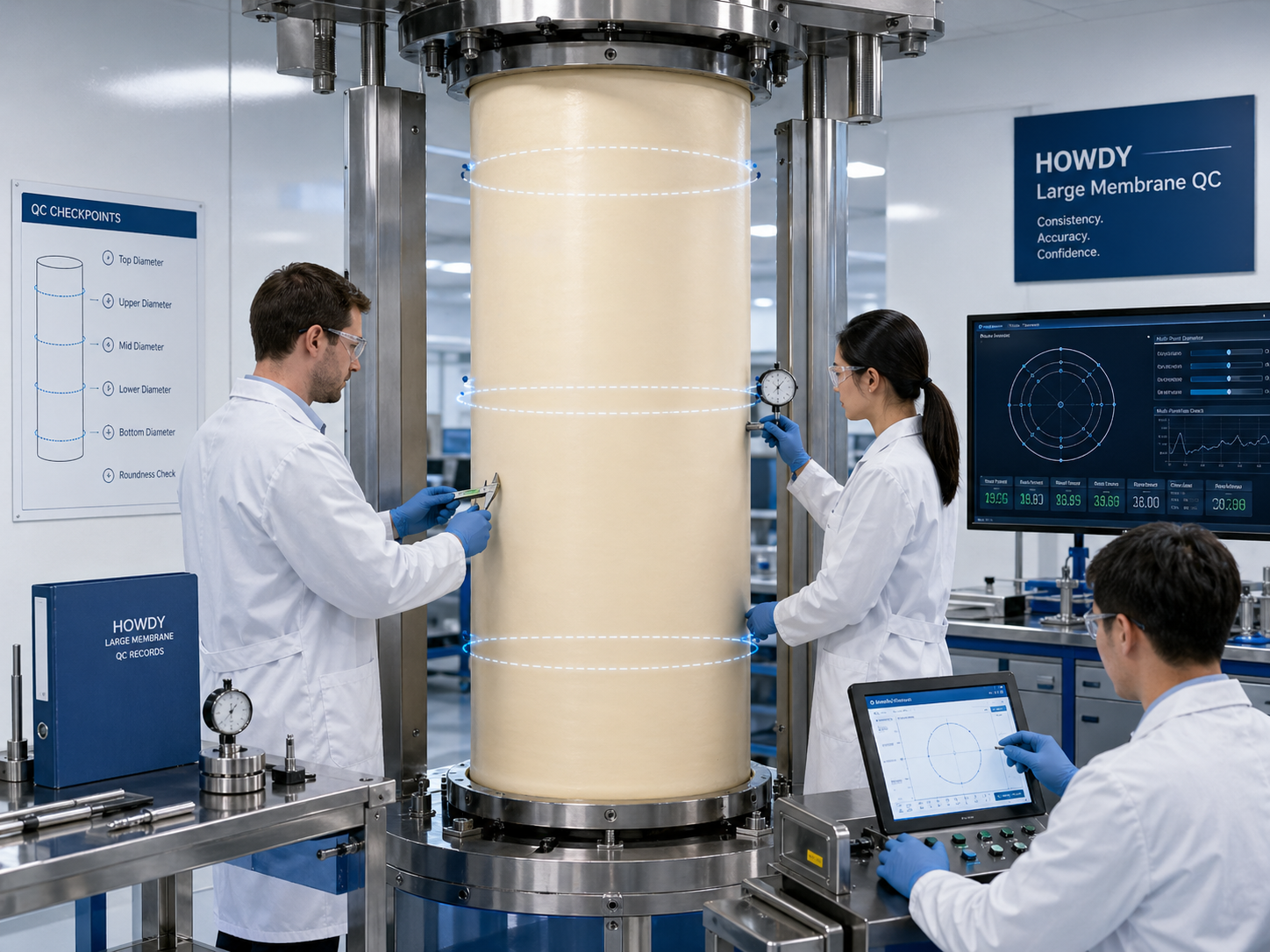
Making a large latex membrane isn’t like cutting a plastic tube. Latex is a living, soft material during production. It flows, it stretches, it shrinks during curing. And the bigger the membrane, the more these effects matter.
Here are the real manufacturing challenges I’ve seen:
- Mold precision at scale: large mandrels must stay round and stable. Any eccentricity becomes diameter variation.
- Latex viscosity and coating uniformity: if the coating thickness varies, the membrane cures and shrinks unevenly. That creates local tight/loose zones.
- Gravity and sagging: long membranes can sag during dipping or curing. That changes wall thickness and diameter along the length.
- Curing control: temperature gradients create different shrink rates. Large parts are more sensitive to uneven heating.
- Demolding and handling tension: pulling too hard during removal can stretch sections permanently, creating a subtle taper.
- Batch consistency: even small latex formulation shifts can change elasticity and shrink behaviour.
This is why “big membrane manufacturing” is a different skill set. It needs stable tooling, controlled process steps, and patient quality checks—not rushed production.
If you’re buying large membranes, it’s worth asking how the supplier controls diameter during curing and how they prevent taper over length. I keep a short supplier question list here: supplier process questions.
| Challenge | Why it matters | Typical result if unmanaged |
|---|---|---|
| Mandrel roundness | Defines base diameter | Oval cross-section |
| Curing uniformity | Controls shrink | Taper, diameter drift |
| Handling tension | Changes final length/ID | Local over-stretch |
Impact of Diameter Variations on Triaxial Test Accuracy
Fit issues don’t just cause leaks—they can distort your data in ways that look “scientific.”
Diameter variation can cause wrinkles, uneven radial restraint, micro-leaks, and shifting boundary conditions—biasing volume change, pore pressure stability, and derived strength parameters.
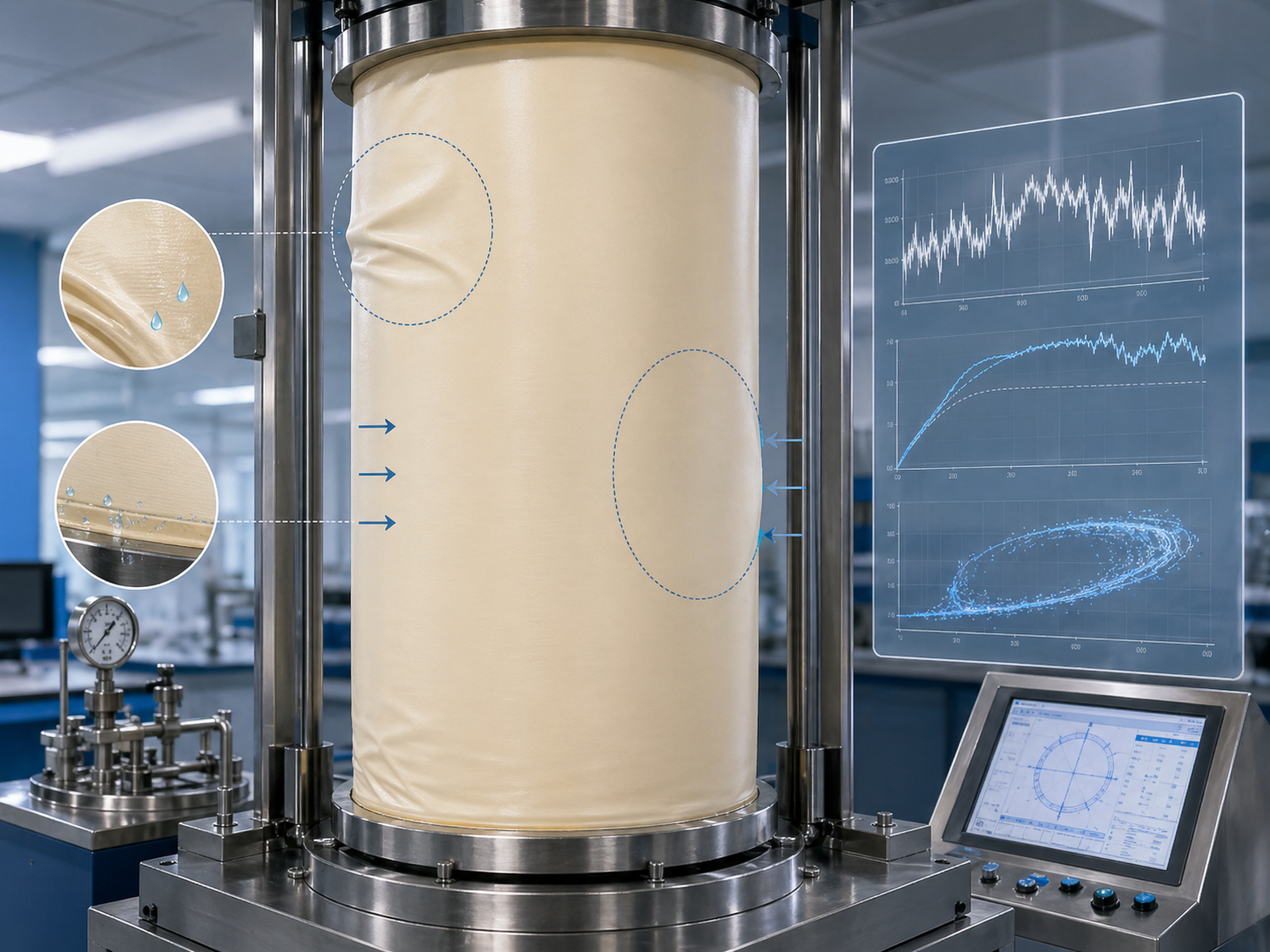
When a large membrane isn’t uniform, the first thing you notice is annoyance: mounting takes longer. But the deeper issue is measurement bias.
1) Volume change errors
Wrinkles and trapped pockets behave like compressible reservoirs. In drained tests, they can create false contraction or mask true dilation. You’ll see it as a volume curve that doesn’t feel “smooth,” especially after pressure steps.
2) Pore pressure drift (CU and long holds)
A membrane that is loose in one section often seals poorly at rings or ports. Micro-leaks are sneaky: they don’t always appear as obvious bubbles. Instead, they show up as B-values that refuse to climb, or pore pressure that slowly drifts during a hold.
3) Uneven radial restraint
If one section is tighter, it adds more hoop tension locally. That means the specimen experiences slightly different restraint around its circumference. In large rigs, this can influence deformation patterns and how you interpret stiffness or strain localisation.
4) Repeatability problems
Even if one test “looks fine,” diameter variation increases scatter across repeats. You’ll spend more time arguing with your own data.
In short: diameter variation steals confidence. You might still get numbers—but you’ll trust them less.
I like a simple check: if you see one of these patterns, suspect fit and uniformity early: data red flags.
| Variation type | Lab symptom | Data risk |
|---|---|---|
| Oversize zones | Persistent wrinkles | False volume signals |
| Undersize zones | Stress marks/tears | Test failure, bias |
| Taper | Uneven seal | Micro-leaks, drift |
| Ovality | Difficult seating | Scatter, instability |
Quality Control and Selection Tips for High-Precision Applications
If your tests are high-value, treat membrane selection like instrument selection.
Check diameter at multiple points, verify roundness, request tolerance data, run a short dummy pressurisation, and choose suppliers with proven large-size tooling and controlled curing.
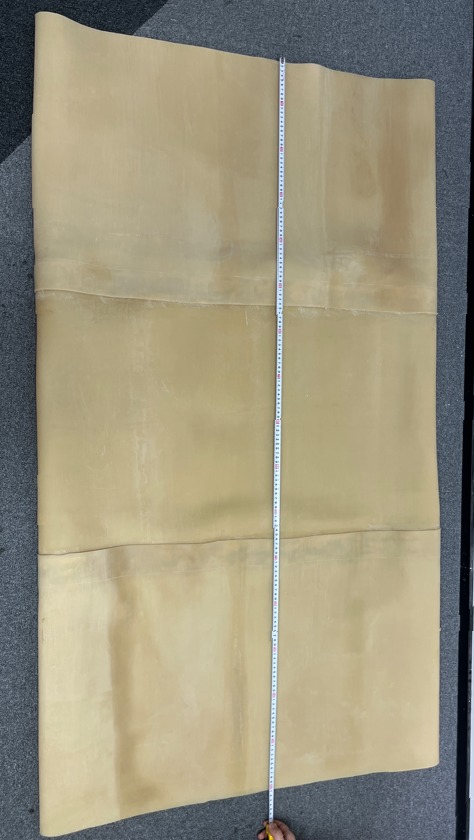
Here’s the QC routine I recommend when you’re dealing with large membranes:
What to check before the first real test
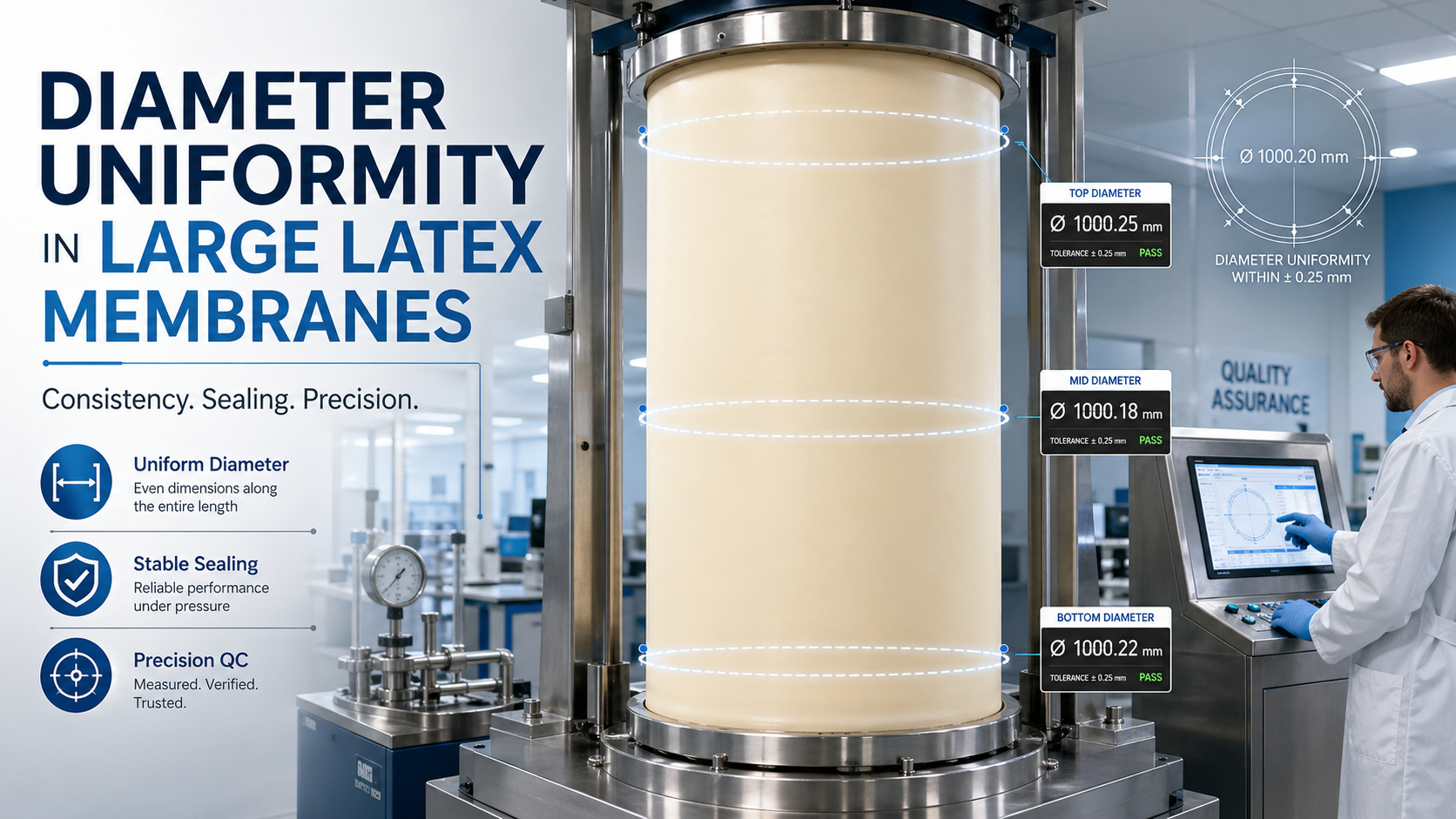
- Measure diameter at multiple heights (top/mid/bottom, more points if length is large).
- Check roundness (ovality)—two perpendicular measurements at each point.
- Look for taper—does the diameter drift gradually along length?
- Visual inspection under good lighting—thin spots, surface waves, small defects.
- Trial mounting on a dummy cylinder—wrinkle-free seating should happen naturally.
- Low-pressure hold / bubble test—micro-leaks show early if you’re patient.
What to ask your supplier
- Do you provide diameter tolerance across the full length?
- How do you control mandrel precision and curing uniformity?
- Do you track lots and provide consistency between batches?
- Can you support custom shapes (flanged ends, reinforced edges) for easier sealing?
Now, this is where I naturally talk about HOWDY, because we’ve been investing in large-size capability for a reason. At HOWDY, we don’t treat large membranes like a scaled-up small product. We built a dedicated process around:
- stable large mandrels with controlled roundness,
- uniform dipping and curing control to reduce taper,
- multi-point diameter inspection across length,
- repeatable lot management so the next order behaves like the last.
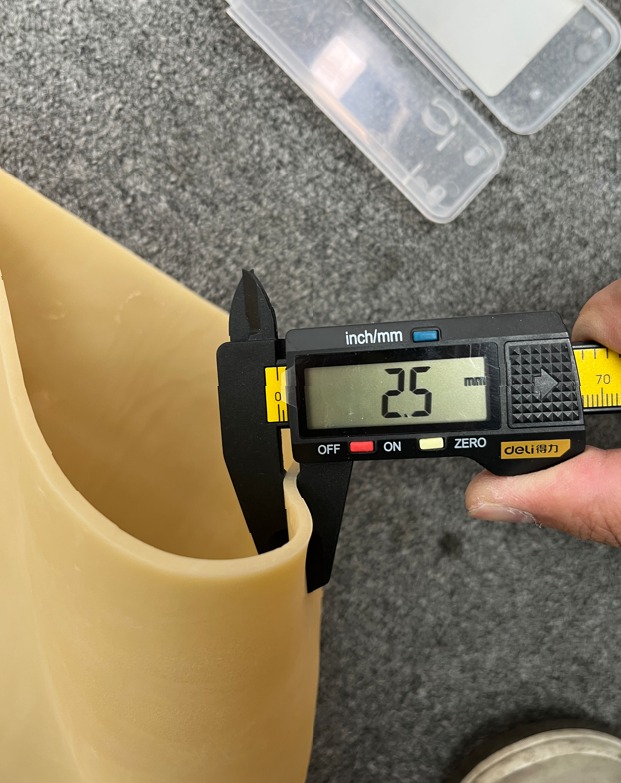
We recently developed an extra-large membrane (Ø600 × 1500 mm, 2.5 mm thickness). That project forced our team to become obsessive about uniformity—because at that size, you can’t hide flaws. If you want guidance on selecting a large membrane for your rig (even if you don’t buy from us), I’m happy to help: HOWDY support.
| QC step | What it protects | Best for |
|---|---|---|
| Multi-point diameter check | Taper and drift | Long membranes |
| Ovality check | Round sealing | High precision rigs |
| Dummy pressurisation | System baseline | Long holds/high σ₃ |
| Supplier tolerance review | Repeatability | Multi-test programs |
Conclusion
Large membranes need uniform diameter to deliver calm mounting and honest data—measure, verify, and choose suppliers built for scale.