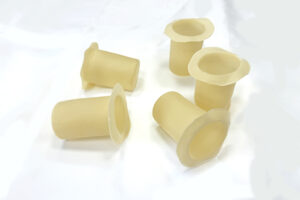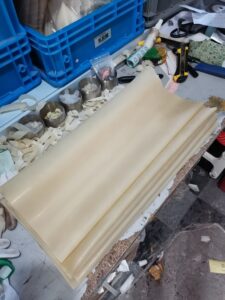
I’ve seen perfectly good latex membranes fail before testing—not because of poor manufacturing, but because of poor storage.
Latex membranes age when exposed to heat, light, ozone, oxygen, and high humidity. Proper storage keeps them flexible, clean, and reliable for triaxial testing and other membrane applications.
Good storage is cheaper than failed tests.
What Causes Latex Membranes to Age During Storage?
Latex is a natural material, and like many natural materials, it changes slowly over time.
Latex membrane aging is mainly caused by oxidation, ozone exposure, heat, ultraviolet light, humidity, and mechanical stress during storage. These factors reduce elasticity and increase cracking risk.
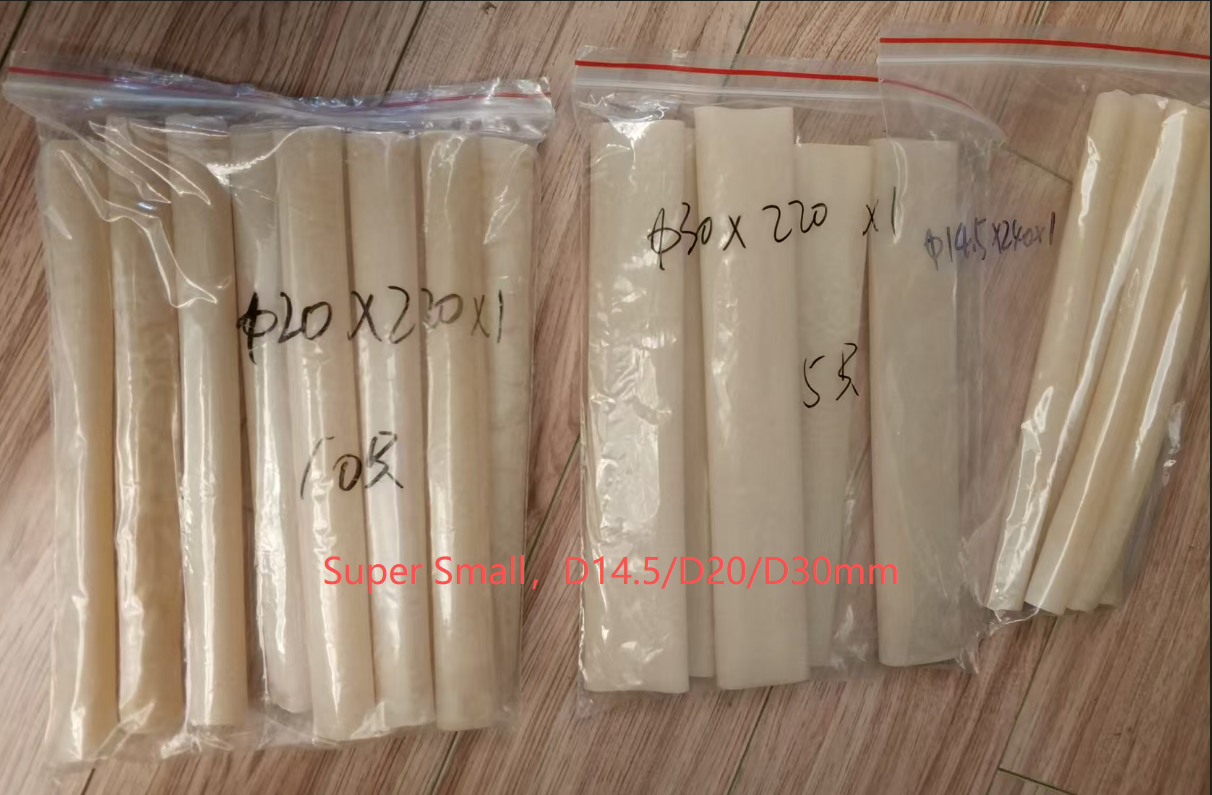
Latex membranes may look simple, but the material is sensitive to its environment. During storage, the polymer chains inside natural latex can slowly change. This process is called aging or degradation.
The most common cause is oxidation. Oxygen in the air reacts slowly with latex, especially when the membrane is stored for a long time. This weakens the material and reduces its ability to stretch and recover.
Another hidden enemy is ozone. Ozone may come from electric motors, fluorescent lights, old equipment, or some laboratory environments. Even small ozone exposure can create tiny cracks on stretched latex surfaces. These cracks may not be obvious at first, but they can grow quickly during mounting or testing.
Heat also speeds up aging. A membrane stored in a warm warehouse or near a window may lose elasticity much faster than one stored in a cool, dark cabinet.
Light matters too. UV light can damage latex surfaces, making them dry, brittle, or slightly sticky. Once the surface changes, the membrane may be harder to mount and more likely to tear.
Humidity is another factor. Too much moisture may encourage surface tackiness, contamination, or mold-like storage problems. Too dry an environment can also make latex feel less flexible over time.
One more detail many people forget: storage stress. If membranes are stretched, folded sharply, compressed under weight, or tied too tightly, local weak points may form.
That is why I always tell labs: treat latex membranes like precision consumables, not ordinary rubber sleeves.
| Aging Cause | What It Does to Latex |
|---|---|
| Oxygen | Slowly weakens polymer structure |
| Ozone | Causes fine surface cracks |
| Heat | Speeds up aging and softening |
| UV light | Damages surface and reduces elasticity |
| High humidity | May cause tackiness or contamination |
| Mechanical stress | Creates local weak points |
How Do Temperature, Light, and Humidity Affect Latex Membrane Performance?
Storage conditions decide whether a membrane stays soft and elastic—or becomes fragile before use.
Latex membranes should be stored in a cool, dark, dry, and stable environment. Heat, sunlight, and uncontrolled humidity can reduce tensile strength, elastic recovery, and sealing performance.
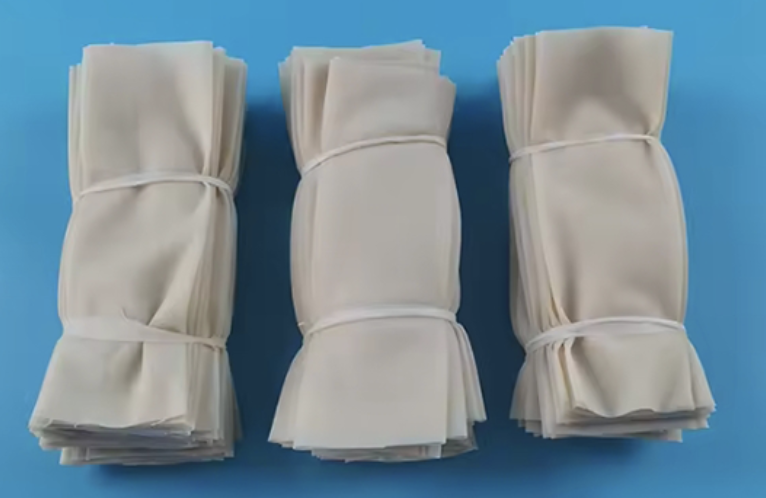
Temperature is one of the biggest factors in latex membrane storage. When storage temperature is too high, the membrane ages faster. The latex may become softer at first, then gradually lose its recovery ability. In practical use, that means the membrane may stretch but not return to its original shape properly.
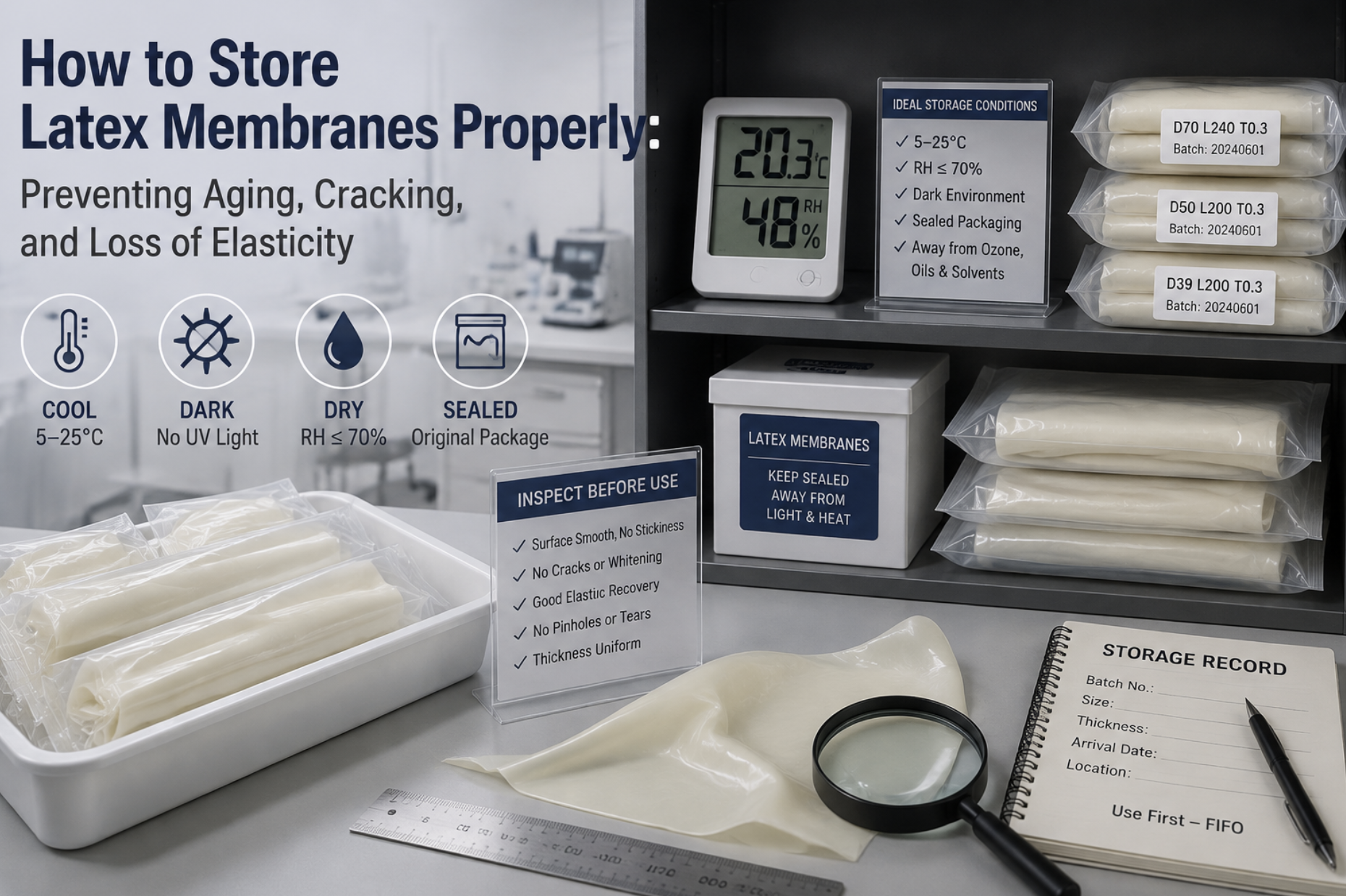
For laboratory membranes, I prefer storage in a stable cool room. A practical range is often around 5°C to 25°C, depending on the product and supplier recommendation. The key is stability. Big temperature swings are not friendly to latex.
Light exposure is another issue. Direct sunlight should be avoided completely. Even indoor light can be a problem if membranes are stored exposed for months. UV light can make latex surfaces dry, cloudy, cracked, or weak. This is why opaque packaging is much better than clear open storage.
Humidity also needs balance. Latex membranes should not be stored in very wet environments. High humidity may cause tackiness, surface contamination, or packaging problems. For many laboratory consumables, a controlled relative humidity below about 70% is a practical target.
However, extremely dry conditions are not ideal either, especially if combined with heat. The membrane may feel less flexible, and surface aging may become more obvious.
I also avoid storing membranes near:
- electric motors;
- ozone-generating equipment;
- strong chemicals;
- oils or solvents;
- heat sources;
- windows;
- heavy objects.
The membrane may still look fine after poor storage, but the real test happens during mounting. Aged latex often tears when stretched, especially near O-rings, caps, or sharp edges.
For internal lab use, I suggest adding a storage label with purchase date, batch number, and “use first” order: FIFO membrane storage label.
| Storage Factor | Good Practice | Risk If Poorly Controlled |
|---|---|---|
| Temperature | Cool and stable | Faster aging, weak recovery |
| Light | Dark or opaque packaging | UV cracking and brittleness |
| Humidity | Controlled, not too wet | Tackiness or contamination |
| Air exposure | Sealed packaging | Oxidation |
| Chemical exposure | Keep away from oils/solvents | Swelling or surface damage |
What Are the Signs of Aging, and When Should a Latex Membrane Be Replaced?
Aged membranes often warn you before they fail. You just need to know what to look for.
Replace a latex membrane if it shows cracks, stickiness, whitening, hardening, weak recovery, pinholes, uneven thickness, or tearing during gentle stretching.
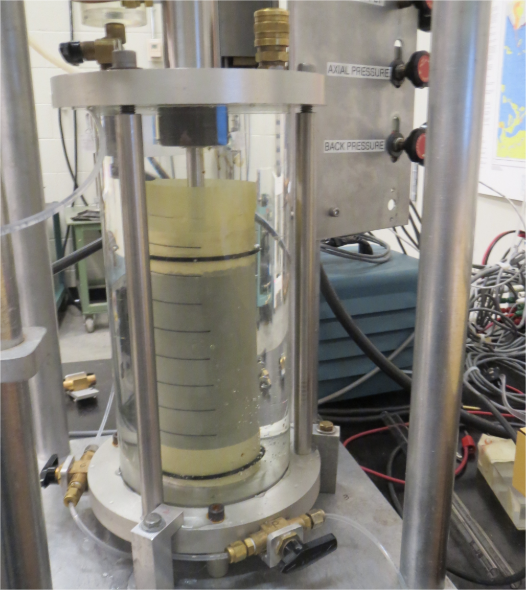
Before using a latex membrane, I always recommend a quick inspection. It only takes a minute, but it can save an entire test.
Start with the surface. A good membrane should feel smooth, clean, and flexible. If the surface feels sticky, dry, rough, or powdery, something has changed. That change may come from heat, oxidation, chemical exposure, or long storage.
Next, check the color and transparency. Some color change is normal depending on the material, but sudden whitening, yellowing, cloudiness, or uneven patches may suggest aging or contamination.
Then gently stretch a small area—not too aggressively. A healthy latex membrane should stretch smoothly and return close to its original shape. If it feels stiff, weak, or does not recover well, I do not trust it for important testing.
Cracks are a clear warning sign. Fine cracks may appear near folded areas or edges. Under confining pressure or installation stress, those small cracks can become leaks or full tears.
Pinholes are another risk. They are difficult to see, especially on thicker or non-transparent membranes. For important tests, a low-pressure leak check after mounting is still necessary.
I also pay attention to smell and surface feel. If the membrane smells strongly of chemicals, oil, or solvent, it may have been exposed to unsuitable storage conditions.
When in doubt, replace the membrane. The cost of one membrane is small compared with losing:
- a prepared specimen;
- technician time;
- machine time;
- long-duration test data;
- customer trust.
Here is a simple inspection table:
| Aging Sign | Possible Cause | Action |
|---|---|---|
| Fine cracks | Ozone or UV aging | Replace |
| Sticky surface | Heat or chemical exposure | Replace |
| Poor recovery | Long aging or oxidation | Replace |
| Whitening/cloudiness | Surface degradation | Inspect carefully |
| Pinholes | Damage or material weakness | Do not use for precision tests |
| Hard or brittle feel | Storage aging | Replace |
A useful inspection guide can be linked here: latex membrane inspection checklist.
What Are the Best Storage Practices for Longer Latex Membrane Service Life?
Good storage is simple: cool, dark, sealed, clean, and stress-free.
Store latex membranes in sealed opaque packaging, away from heat, sunlight, ozone, oils, solvents, and sharp folds. Use FIFO inventory control and inspect before every test.

The best storage method is not complicated. It is consistent.
At HOWDY, I always recommend that customers build a small storage routine for latex membranes, especially if they keep stock for months.
1. Keep membranes sealed
Do not open packages until needed. Sealed packaging reduces oxygen, dust, moisture, and contamination exposure.
If a package is opened, reseal it properly. Use clean bags and avoid mixing old and new batches together.
2. Store in a cool, dark location
A cabinet or drawer away from windows is much better than an open shelf. Avoid direct sunlight and strong indoor UV exposure.
Do not store membranes near heaters, hot equipment, or warehouse doors where temperature changes quickly.
3. Avoid ozone and chemicals
Keep membranes away from motors, high-voltage equipment, ozone sources, oils, fuels, solvents, and strong cleaning chemicals.
Latex can be sensitive to many chemical environments. Even vapor exposure may affect the surface over time.
4. Prevent mechanical stress
Do not place heavy objects on membranes. Do not fold them sharply for long periods. Do not hang them under tension.
Membranes should rest naturally in packaging, without being stretched.
5. Use FIFO inventory
FIFO means “first in, first out.” Use older batches first, as long as they pass inspection.
Label each batch with:
- arrival date;
- size;
- thickness;
- batch number;
- storage location.
6. Inspect before use
Even well-stored membranes should be checked before installation.
For precision triaxial testing, storage quality directly affects:
- sealing reliability;
- B-value stability;
- pore pressure response;
- membrane tear resistance;
- repeatability.
This is also why membrane supplier quality matters. A well-made membrane still needs proper storage, but stable manufacturing gives the membrane a better starting point.
At HOWDY, we support laboratories with consistent latex membrane production, custom sizes, stable thickness control, and practical storage guidance. For customers using large-size or special membranes, we also suggest project-based inventory planning so membranes are not stored too long before testing.
| Best Practice | Benefit |
|---|---|
| Sealed packaging | Slows oxidation |
| Dark storage | Prevents UV damage |
| Cool temperature | Extends service life |
| Controlled humidity | Reduces tackiness and contamination |
| No sharp folding | Prevents weak points |
| FIFO use | Reduces aging risk |
Conclusion
Store latex membranes like precision testing materials: cool, dark, sealed, clean, and unstressed. Good storage keeps elasticity alive.