
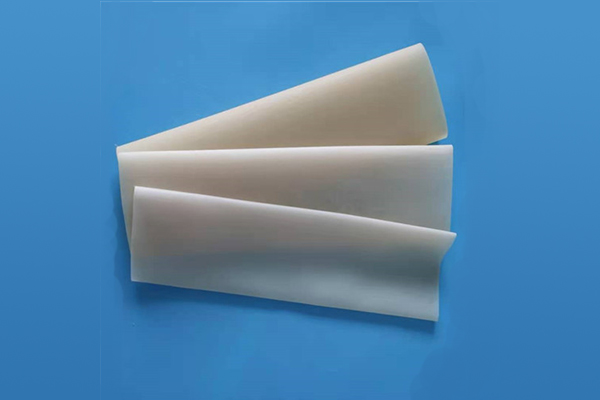
A triaxial latex membrane is a thin, flexible barrier placed around a cylindrical soil or rock specimen during laboratory testing. It separates the specimen and its pore fluid from the pressurized fluid inside the triaxial cell while allowing confining pressure to be transmitted to the specimen.
Although the membrane appears simple, its performance depends on polymer structure, compound formulation, vulcanization, thickness uniformity, elasticity, tear resistance and aging condition.
These properties influence whether the membrane can:
- stretch over the specimen without permanent damage;
- maintain a reliable seal during consolidation and shearing;
- follow specimen deformation;
- resist puncture from angular particles;
- avoid introducing excessive mechanical restraint;
- minimize leakage between the specimen and cell fluid.
Understanding these material properties helps laboratories select a membrane that is appropriate for the specimen dimensions, soil type, confining pressure and test duration.
What Is a Triaxial Latex Membrane?
A triaxial latex membrane is a tubular elastomeric component used to enclose the test specimen between the top cap and base pedestal.
During assembly, the membrane is commonly expanded with a membrane stretcher, positioned around the specimen and sealed at both ends using O-rings or another specified sealing arrangement.
Inside the cell, the membrane performs two related functions:
- It prevents direct contact between the specimen and the cell fluid.
- It transfers external cell pressure to the specimen through a flexible boundary.
The membrane must remain intact while the specimen changes shape. During axial compression, the specimen normally shortens and expands laterally. The membrane therefore experiences changing circumferential and axial strains throughout the test.
It should not be described as a rigid pressure vessel or structural reinforcement. Its intended role is to provide a flexible, sealed boundary with as little unwanted influence on the measured specimen response as practical.
The Polymer Structure of Natural Rubber Latex
Many triaxial membranes are manufactured from compounds based on natural rubber latex.
The primary elastomer in natural rubber is predominantly cis-1,4-polyisoprene. Its long molecular chains can change configuration when stretched and return toward their original arrangement when the load is removed.
This molecular mobility contributes to several useful characteristics:
- high extensibility;
- elastic recovery;
- flexibility at relatively low thickness;
- resistance to repeated deformation;
- ability to conform to the specimen surface.
Raw natural rubber alone is not normally sufficient for a dependable laboratory membrane. The material must be formulated and cured to obtain a suitable balance of strength, elasticity, tear resistance, aging resistance and manufacturing consistency.
The exact formulation varies between manufacturers. A membrane should therefore be evaluated using relevant product specifications and quality-control data rather than assuming that every natural-rubber membrane has identical properties.
Why Vulcanization Matters
Vulcanization creates crosslinks between rubber polymer chains.
Without an appropriate crosslinked network, rubber may be excessively soft, tacky, weak, or susceptible to permanent deformation. Crosslinking helps the material recover after stretching and improves its mechanical stability.
The degree and uniformity of cure influence:
- elastic modulus;
- tensile strength;
- elongation;
- permanent set;
- tear resistance;
- fatigue behavior;
- heat resistance;
- long-term stability.
An under-cured compound may have poor strength, tackiness or excessive permanent deformation. An over-cured or poorly formulated material may become too stiff or show reduced resistance to repeated extension.
For a triaxial membrane, the objective is not simply to maximize hardness or tensile strength. A very stiff compound may resist puncture but introduce greater restraint around the specimen.
The required result is a controlled balance between flexibility, strength and durability.
What Else Is Present in a Latex Compound?
A manufactured latex membrane is not necessarily composed of pure polyisoprene alone.
Depending on the formulation, a compound may include:
- curing agents;
- vulcanization accelerators;
- activators;
- antioxidants;
- stabilizers;
- pigments;
- processing aids;
- fillers;
- other formulation-specific additives.
These ingredients affect manufacturing and final performance.
For example, antioxidants may slow oxidative deterioration, while the curing system influences crosslink density and elastic response. Fillers can change strength, modulus, hardness and processing behavior.
More additives do not automatically produce a better membrane. The formulation must remain compatible with the intended combination of flexibility, dimensional consistency and environmental resistance.
Because formulations are proprietary and application-specific, users should avoid assuming that membranes with the same color or nominal thickness have the same mechanical properties.
The Material Properties That Matter Most
No single property determines whether a membrane is suitable for triaxial testing. Several properties interact.
1. Elasticity and Elastic Recovery
Elasticity allows the membrane to expand during installation and follow the specimen during loading.
A suitable membrane should recover substantially after ordinary stretching, although a used membrane may not return perfectly to its original dimensions.
Poor elastic recovery can indicate:
- excessive stretching;
- permanent set;
- aging;
- chemical exposure;
- inappropriate storage;
- damage to the rubber network.
Elasticity should not be confused with low stiffness. Two membranes may both stretch without breaking but exert different forces at the same extension.
For test accuracy, the force required to deform the membrane may matter as much as its maximum stretch before rupture.
2. Tensile Strength
Tensile strength describes the stress a rubber specimen can withstand under a defined tensile test before breaking.
It can be useful for comparing rubber compounds when specimens are tested using the same method and conditions. However, it does not independently predict membrane performance in a triaxial test.
Tensile results depend on factors such as:
- specimen geometry;
- extension rate;
- temperature;
- conditioning;
- compound formulation;
- cure state;
- thickness;
- test direction.
ASTM D412 describes standardized tensile tests for vulcanized rubber and thermoplastic elastomers. ASTM also notes that tensile properties depend on both the material and test conditions and may not directly represent every end-use requirement.
3. Elongation at Break
Elongation at break indicates how far a rubber test specimen can extend before rupture under a defined tensile test.
High elongation can be useful because a membrane must expand over the specimen and accommodate lateral deformation.
However, elongation at break should not be used as the only selection criterion. A membrane can have high ultimate elongation while still being unsuitable because it is:
- too stiff at normal working strain;
- inconsistent in thickness;
- vulnerable to puncture;
- permanently stretched after installation;
- degraded by aging.
The working extension during installation should remain safely below the membrane’s damage limit.
4. Modulus at a Specified Elongation
For triaxial testing, the tensile stress required to produce a specified extension may be especially relevant.
A higher modulus means that the membrane exerts more force at a given strain. This can increase the membrane’s mechanical contribution to the measured response.
A lower modulus may reduce restraint but can also be associated with lower puncture resistance or different handling behavior, depending on the compound and thickness.
Modulus, thickness and specimen diameter should therefore be considered together.
5. Tear Resistance
Tear resistance describes a material’s resistance to the initiation or propagation of a tear under a defined test configuration.
It is important because small cuts or punctures may grow as the membrane is stretched.
Potential sources of damage include:
- angular particles;
- sharp specimen edges;
- burrs on platens or tools;
- fingernails;
- damaged O-ring grooves;
- excessive localized stretching;
- particles trapped between the membrane and stretcher.
ASTM D624 provides standardized procedures for measuring the tear strength of vulcanized rubber and thermoplastic elastomers. Tear-test results remain dependent on specimen geometry, strain rate and test conditions, so they should be used as comparative data rather than a guarantee of service performance.
6. Puncture Resistance
Puncture resistance is not identical to tensile strength or tear strength.
A sharp or angular particle can concentrate stress over a small area and damage a membrane even when the rubber has acceptable tensile properties.
Puncture risk generally becomes more important when testing:
- gravelly soil;
- crushed aggregate;
- weathered rock;
- specimens with protruding particles;
- large specimens with irregular surfaces;
- materials tested at high confinement.
Possible risk-reduction measures include:
- selecting an appropriate membrane thickness;
- carefully preparing the specimen surface;
- removing loose sharp particles when permitted;
- using suitable installation tools;
- avoiding excessive membrane stretch;
- considering protective or double-membrane arrangements when allowed by the method.
Any protective measure must be evaluated for its effect on specimen restraint, drainage and volume-change calculations.
7. Thickness and Thickness Uniformity
Membrane thickness directly affects both durability and mechanical restraint.
A thicker membrane may provide:
- greater puncture resistance;
- easier handling;
- improved resistance to accidental damage;
- greater durability around coarse particles.
It may also produce:
- greater radial restraint;
- a larger membrane-force correction;
- more influence on small or weak specimens;
- increased resistance to specimen deformation.
A thinner membrane may reduce restraint but can be less tolerant of sharp particles, handling damage or high installation strain.
Uniformity matters because a local thin area can become a weak point, while a locally thick area may change deformation resistance.
Nominal thickness alone is therefore not enough. Manufacturing tolerance and actual thickness distribution should also be considered.
For selection guidance, see How to Choose the Right Thickness and Size of Latex Membrane for Triaxial Tests.
8. Dimensional Accuracy
The membrane’s internal diameter and length must suit the specimen and sealing arrangement.
If the membrane is too small, installation may require excessive stretching. This can:
- reduce the remaining strain capacity;
- increase circumferential tension;
- make thickness effectively smaller after stretching;
- increase the risk of tearing or puncture;
- make correct positioning difficult.
If the membrane is too large, it may wrinkle or fit poorly. Wrinkles can trap air, interfere with sealing and create nonuniform contact with the specimen.
The membrane must also provide enough length for secure sealing at both the top cap and base without excessive axial tension.
Relevant dimensions include:
- specimen diameter;
- specimen height;
- top-cap diameter;
- base-pedestal diameter;
- sealing-band positions;
- required overlap at both ends.
How Does the Membrane Transfer Confining Pressure?
Cell pressure acts on the outside surface of the membrane. Because the membrane is thin and flexible, this pressure is transmitted to the specimen boundary.
However, the membrane is not mechanically neutral.
As the specimen expands laterally, the membrane stretches and develops tensile force. This force can add restraint to the specimen. The measured deviator stress may therefore include a contribution from membrane stiffness.
The magnitude of the effect depends on factors such as:
- membrane thickness;
- membrane modulus;
- specimen diameter;
- axial strain;
- specimen deformation pattern;
- test pressure;
- the correction model being used.
Membrane corrections can be particularly important for:
- small-diameter specimens;
- very soft soil;
- tests conducted at low effective stress;
- unusually thick or stiff membranes;
- large axial strains.
Laboratories should follow the applicable test standard and reporting procedure when determining whether a membrane correction is required.
Membrane Penetration into Granular Specimens
For granular specimens, the membrane may move into voids between particles at the specimen surface when cell pressure is applied.
This is known as membrane penetration.
The effect can cause an apparent change in specimen volume that is not entirely associated with deformation of the soil skeleton. It may therefore influence calculations involving:
- drained volume change;
- volumetric strain;
- consolidation response;
- density or void-ratio change;
- stress–dilatancy behavior.
Membrane penetration is influenced by:
- particle size;
- surface void size;
- particle angularity;
- confining pressure;
- membrane thickness;
- membrane stiffness;
- specimen diameter;
- specimen surface condition.
It should not be treated as a universal fixed correction. The significance and appropriate correction depend on the material, equipment and test method.
Read Membrane Penetration Effect in Triaxial Testing Explained for a focused discussion.
Permeability and Leakage
The membrane must prevent bulk flow of cell fluid into the specimen during the test.
There is an important distinction between:
- leakage through a hole, tear or defective seal;
- molecular permeation through an intact elastomer.
For many routine triaxial tests, punctures and sealing failures are the most immediate concerns. For long-duration tests, high pressure, unusual fluids or chemically aggressive conditions, permeation and material compatibility may require additional consideration.
A membrane that appears intact should still be checked for:
- pinholes;
- seam or wall defects;
- damage near the ends;
- cuts around O-rings;
- localized thinning;
- deterioration from previous storage.
Where chemical compatibility is uncertain, the membrane material should be evaluated under conditions representative of the actual fluid, temperature, pressure and exposure time.
How Temperature Affects Latex
Rubber behavior is temperature-dependent.
Changes in temperature can influence:
- stiffness;
- extensibility;
- recovery;
- tear behavior;
- aging rate;
- permeation;
- pressure and volume measurements.
Higher temperatures generally accelerate chemical aging processes such as oxidation. Low temperatures can make an elastomer less flexible, although the degree of change depends on formulation and exposure conditions.
Laboratory temperature should be controlled when results from different tests are compared.
Membranes should not be stored close to heaters or exposed to unnecessary temperature cycling.
How Natural Rubber Ages
Natural rubber can deteriorate through oxidation, ozone exposure, ultraviolet radiation, heat and contact with incompatible substances.
Possible signs of aging include:
- surface cracking;
- hardening;
- tackiness;
- discoloration;
- loss of elastic recovery;
- permanent deformation;
- reduced tear resistance;
- increased brittleness.
Ozone cracking can develop when rubber is stored or exposed in a stretched condition. Small cracks may grow during membrane installation or testing.
ASTM D573 provides an accelerated air-oven method for comparing changes in the physical properties of vulcanized rubber after elevated-temperature exposure. Accelerated-aging results are useful for comparison but do not reproduce every actual storage or service condition.
To reduce unnecessary aging, unused membranes should generally be stored:
- in a cool, dry location;
- away from direct sunlight;
- away from ozone-producing electrical equipment;
- without excessive stretching;
- away from oils, solvents and incompatible chemicals;
- in packaging that protects them from dust and mechanical damage.
Always follow the supplier’s specific storage recommendations because formulation and packaging differ.
Can a Triaxial Membrane Be Reused?
Reuse should not be assumed simply because a membrane has no obvious hole.
After a test, the membrane may have experienced:
- permanent stretch;
- localized thinning;
- small punctures;
- tear initiation;
- chemical exposure;
- abrasion;
- O-ring damage;
- stress concentration around angular particles.
The decision to reuse a membrane should consider the applicable laboratory procedure, test sensitivity and quality requirements.
For research, specification or high-value testing, a new inspected membrane may reduce avoidable uncertainty. If reuse is permitted, the membrane should be cleaned using a compatible procedure, dried, inspected and checked for leakage and permanent damage.
A membrane should be rejected if it shows cracking, tackiness, cuts, pinholes, severe discoloration, permanent necking or poor elastic recovery.
Quality-Control Properties for Triaxial Membranes
A useful membrane specification should include more than the phrase “high-quality latex.”
Depending on the application, relevant properties may include:
| Property | Why it matters |
|---|---|
| Internal diameter | Controls fit and installation stretch |
| Length | Provides sufficient coverage and sealing overlap |
| Wall thickness | Influences puncture resistance and mechanical restraint |
| Thickness tolerance | Helps control variability between membranes |
| Tensile behavior | Describes strength and stress response under extension |
| Elongation | Indicates available extension before rupture under a defined test |
| Modulus | Relates to membrane force at working strain |
| Tear resistance | Helps compare resistance to tear propagation |
| Permanent set | Indicates recovery after controlled extension |
| Visual condition | Identifies holes, inclusions, cracks and surface defects |
| Aging performance | Helps assess property retention after controlled exposure |
If supplier data are being compared, the test method, specimen geometry, conditioning and measurement units should also be compared. Values obtained under different conditions may not be directly equivalent.
For example, ASTM D412 explains that tensile properties depend on test conditions such as extension rate, temperature, humidity, specimen geometry and conditioning.
Inspection Before Installation
Before using a membrane, inspect it under adequate lighting.
Check for:
- pinholes;
- cuts;
- tears;
- cracks;
- uneven wall thickness;
- foreign inclusions;
- tacky areas;
- brittle areas;
- permanent folds;
- discoloration associated with deterioration;
- damage at either open end.
The inspection can include gentle extension to reveal defects that are difficult to see when the membrane is relaxed. Avoid overstretching the membrane during inspection.
The membrane stretcher, top cap, pedestal and tools should also be checked for burrs, sharp edges or particles that could damage the rubber.
Installation Practices That Protect the Membrane
Correct installation helps preserve membrane integrity.
General practices include:
- Confirm that the membrane diameter, length and thickness suit the specimen.
- Inspect the membrane and all contact surfaces.
- Remove sharp debris from the installation area.
- Position the specimen correctly on the pedestal.
- Expand the membrane only as much as necessary.
- Avoid touching the membrane with sharp tools or fingernails.
- Release the membrane evenly around the specimen.
- Smooth major wrinkles without damaging the specimen.
- Install sealing rings in the specified positions.
- Check drainage and pressure lines before closing the cell.
- Perform the required leak and system checks.
The exact procedure should follow the applicable test method and laboratory quality system.
Natural Latex Is Not Automatically Suitable for Every Environment
Natural rubber has valuable elasticity, but it is not universally resistant to every chemical or environmental condition.
Compatibility may be affected by:
- oils and hydrocarbons;
- solvents;
- oxidizing agents;
- ozone;
- ultraviolet exposure;
- elevated temperature;
- unusually long immersion;
- contaminated pore fluids.
Where aggressive chemicals are present, users should evaluate compatibility rather than relying only on the material name.
A chemically resistant membrane that becomes excessively stiff may also be unsuitable for sensitive testing. Both chemical resistance and mechanical influence must be considered.
Is Natural Rubber Biodegradable?
Natural rubber is derived from a renewable biological source and can degrade under some environmental conditions.
However, a manufactured membrane is a vulcanized compound containing curing chemicals and other additives. Its environmental behavior is not identical to that of raw natural latex.
The rate and extent of degradation depend on:
- formulation;
- crosslink density;
- thickness;
- temperature;
- oxygen;
- moisture;
- microorganisms;
- disposal conditions.
It is therefore inaccurate to describe every latex membrane as rapidly or completely biodegradable.
Used membranes may also have contacted contaminated soil or test fluids. Disposal should follow the laboratory’s waste procedure and applicable local requirements.
Common Membrane Failure Modes
Puncture
Usually associated with sharp particles, damaged tools, excessive stretching or surface irregularities.
Tear at the Sealing Area
May result from damaged membrane ends, sharp O-ring grooves, unsuitable ring size or excessive localized tension.
Leakage at the Top Cap or Pedestal
Can be caused by incorrect membrane positioning, twisted O-rings, contamination or insufficient overlap.
Excessive Wrinkling
Usually associated with an oversized membrane, poor positioning or inadequate installation technique.
Permanent Stretching
May result from excessive installation strain, prolonged deformation, aging or an unsuitable compound.
Cracking
Often associated with oxidation, ozone, ultraviolet exposure, heat or prolonged storage under strain.
Membrane Penetration
Occurs when the membrane enters surface voids in granular specimens under pressure. It may affect volume-change interpretation even when the membrane does not physically fail.
Frequently Asked Questions
What material are triaxial membranes made from?
Many are manufactured from compounds based on natural rubber latex, whose principal elastomer is cis-1,4-polyisoprene. The finished membrane also contains curing-system ingredients and other formulation-specific additives.
Why is latex suitable for triaxial testing?
Latex can combine extensibility, elastic recovery, flexibility and the ability to form a thin, continuous barrier. Actual performance depends on formulation, cure, thickness and manufacturing quality.
Does the membrane affect triaxial test results?
Yes. Membrane stiffness can add restraint as the specimen deforms. Membrane penetration can also influence volume-change measurements in granular specimens.
Is a thicker membrane always better?
No. Greater thickness may improve handling and puncture resistance but can increase membrane restraint. Thickness should be selected according to the specimen, particle characteristics, test pressure and required accuracy.
Can tensile strength alone determine membrane quality?
No. Tensile strength is only one property. Modulus, elongation, tear and puncture resistance, thickness uniformity, dimensions, aging and visual defects also matter.
Why do membranes crack during storage?
Cracking can be associated with ozone, oxidation, heat, ultraviolet exposure, chemical contamination or storage while stretched.
Can the same membrane be used for multiple tests?
Reuse depends on the applicable procedure and the membrane’s condition. A membrane that appears intact may still have localized thinning, permanent set or small damage. Sensitive testing generally benefits from a new, inspected membrane.
Can latex membranes be used with every test fluid?
Not automatically. Chemical compatibility depends on the compound, fluid, temperature, pressure and exposure time. Compatibility should be evaluated when unusual or aggressive fluids are involved.
What causes membrane penetration?
Cell pressure can push the membrane into voids between particles at the surface of a granular specimen. Particle size, angularity, pressure, membrane thickness and membrane stiffness influence the effect.
How should membranes be stored?
They should generally be protected from sunlight, heat, ozone-producing equipment, excessive stretching, sharp objects and incompatible chemicals. Supplier-specific instructions should take priority.
Conclusion
The performance of a triaxial latex membrane begins with its polymer structure but depends on much more than the presence of natural rubber.
Compound formulation and vulcanization determine how the material balances elasticity, modulus, strength, tear resistance and aging behavior. Manufacturing controls determine whether the membrane has suitable dimensions, uniform thickness and freedom from defects.
During a triaxial test, these properties affect installation, sealing, puncture resistance, membrane restraint and penetration into surface voids. A membrane must therefore be selected according to the complete test condition rather than by diameter or nominal thickness alone.
For reliable testing, laboratories should combine appropriate membrane specifications with careful storage, inspection, installation and reporting. The objective is not to select the strongest or thickest membrane, but to use a consistent flexible boundary that maintains isolation while introducing as little unwanted influence as practical.





2 Responses