
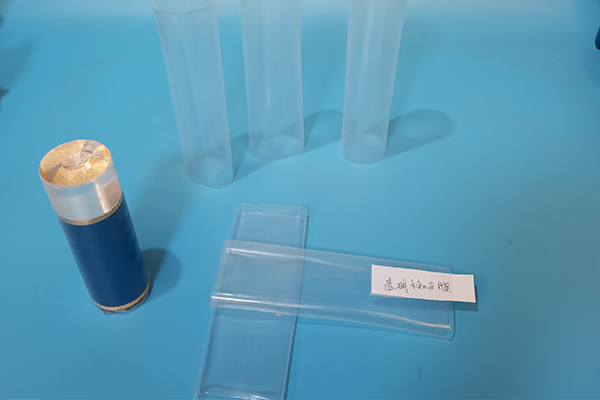
A transparent latex membrane is a thin, flexible rubber tube that allows the surface of a soil or rock specimen to remain visible during specimen preparation and, where the triaxial cell design permits, during testing.
Like a conventional triaxial membrane, it separates the specimen and its pore fluid from the pressurized cell fluid. Its distinguishing feature is improved visibility through the membrane.
This visibility can help laboratory personnel identify:
- wrinkles and folds;
- trapped air or fluid pockets;
- incorrect membrane positioning;
- damaged sealing areas;
- surface irregularities;
- localized bulging;
- visible shear-band development;
- punctures or leakage;
- changes that occur during long-duration testing.
Transparency does not automatically make a membrane more accurate. The membrane must still have the correct diameter, length, thickness, elasticity, sealing performance and chemical compatibility for the test.
Important: A transparent membrane is a test component, not a substitute for the applicable ASTM, ISO, BS or laboratory procedure. Selection and use should follow the current test method, equipment instructions and approved quality system.
Short Answer
A transparent latex membrane is used when a laboratory wants the specimen boundary to remain visible while maintaining a flexible seal between the specimen and triaxial cell fluid.
Its main advantage is visual access. It can make installation defects and some specimen deformation easier to observe.
Its limitations include:
- reduced visibility with increasing thickness;
- optical distortion through the cell wall and fluid;
- yellowing or cloudiness during aging;
- possible surface reflections;
- membrane stiffness and penetration effects;
- no guaranteed improvement in measurement accuracy.
What Does “Transparent” Mean?
In practice, transparent latex membranes may range from optically clear to translucent.
These terms should not be treated as identical:
- Transparent: objects can be seen through the membrane with relatively clear detail.
- Translucent: light passes through, but specimen details appear blurred.
- Opaque: little or no useful detail can be observed through the material.
Natural rubber latex is not always perfectly colorless. A membrane may have a pale yellow or amber appearance, especially when it is thicker.
Visible clarity can depend on:
- membrane thickness;
- rubber formulation;
- curing system;
- pigments and fillers;
- surface finish;
- wall uniformity;
- stretching during installation;
- aging;
- storage conditions;
- lighting;
- cell-fluid clarity.
A thin membrane may appear clearer when stretched over a specimen than when inspected in its relaxed condition.
How Does a Transparent Membrane Work?
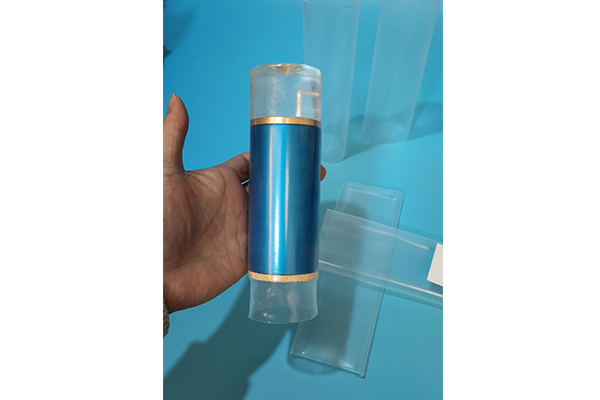
The transparent membrane performs the same basic sealing function as another suitable triaxial specimen membrane.
A typical specimen assembly includes:
- a base pedestal;
- a lower porous stone;
- a cylindrical specimen;
- an upper porous stone;
- a top cap;
- the transparent latex membrane;
- O-rings or approved end seals;
- drainage and pore-pressure connections.
The membrane is installed around the specimen and secured over the pedestal and top cap. The assembly is then enclosed inside the triaxial cell.
Cell fluid applies pressure to the outside of the membrane. Because the membrane is flexible, pressure is transferred to the specimen boundary while the cell fluid remains separated from the soil and its controlled drainage system.
The membrane does not create confining pressure. The triaxial pressure system creates and controls that pressure.
Why Use a Transparent Membrane?
The main reason to use a transparent membrane is improved visual inspection.
Inspection during installation
Before the triaxial cell is assembled, transparency may make it easier to see:
- folds against the specimen;
- trapped air between the membrane and specimen;
- misaligned filter-paper strips;
- protruding particles;
- incorrect top-cap position;
- insufficient overlap at the pedestal or top cap;
- damage near an O-ring.
This is particularly helpful when the specimen assembly includes multiple components that must remain correctly positioned.
Observation during testing
If the triaxial cell wall and cell fluid are sufficiently clear, the membrane may allow observation of:
- specimen bulging;
- nonuniform lateral deformation;
- development of a visible shear zone;
- tilting of the top cap;
- membrane wrinkling;
- displacement of filter strips;
- leakage or fluid intrusion;
- deterioration during long-duration tests.
Observation through the cell may still be limited by curvature, refraction, condensation, lighting and equipment geometry.
Photographic documentation
A transparent membrane can support photographic records of:
- the initial specimen condition;
- the installed assembly;
- deformation at selected strain levels;
- the final failure pattern;
- localized membrane or sealing problems.
Photographs should include a specimen identifier, scale or known geometry, and suitable lighting where possible.
Does Transparency Improve Test Accuracy?
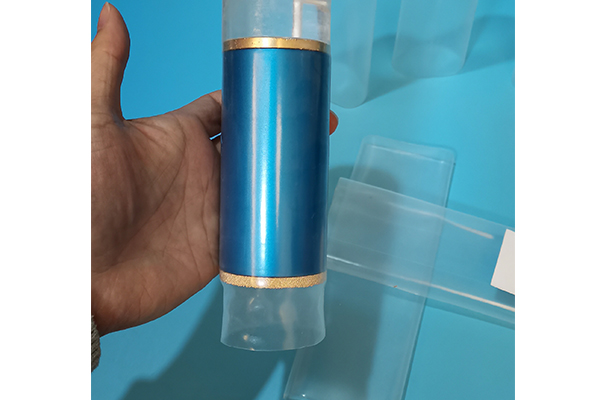
Not by itself.
Transparency can help operators detect defects before or during a test. Preventing a fold, leak or installation error may improve test reliability.
However, visual clarity does not directly correct:
- load-cell calibration errors;
- pore-pressure transducer errors;
- incomplete saturation;
- insufficient consolidation;
- unsuitable strain rate;
- frame compliance;
- end restraint;
- membrane force;
- membrane penetration;
- incorrect stress or area calculations.
A clear membrane with the wrong thickness or diameter can introduce more uncertainty than a correctly selected conventional membrane.
The correct conclusion is:
Transparency improves inspection capability, while dimensional and mechanical properties determine whether the membrane is suitable for the test.
Transparent Versus Conventional Latex Membranes
| Property | Transparent membrane | Conventional colored or less transparent membrane |
|---|---|---|
| Specimen visibility | Usually better | Usually lower |
| Fold detection | Often easier | May require inspection by touch and positioning |
| Photographic documentation | More practical | Surface details may be obscured |
| Optical deformation monitoring | Potentially possible | Usually more difficult |
| Sealing function | Depends on fit and condition | Depends on fit and condition |
| Membrane restraint | Depends on thickness and modulus | Depends on thickness and modulus |
| Puncture resistance | Product-specific | Product-specific |
| Chemical compatibility | Compound-specific | Compound-specific |
| Aging resistance | Compound-specific | Compound-specific |
Transparency alone does not establish tensile strength, elongation, tear resistance or chemical compatibility.
Two membranes may look equally clear but behave differently because of differences in formulation, cure and wall thickness.
When Is a Transparent Membrane Most Useful?
A transparent membrane may be useful for:
- demonstrations and training;
- research requiring visual documentation;
- tests where installation quality is difficult to confirm;
- specimens with filter strips or other visible components;
- observation of localized deformation;
- large specimens where folds are harder to detect;
- long-duration tests requiring periodic visual checks;
- development and verification of installation procedures;
- imaging-based deformation research.
It may offer less practical benefit when:
- the cell wall is opaque or heavily scratched;
- the cell fluid is cloudy;
- condensation blocks the view;
- external equipment obstructs the specimen;
- visibility is not required by the test program;
- the transparent membrane does not meet mechanical requirements;
- imaging resolution is insufficient for the intended measurement.
Transparent Membranes and Digital Imaging
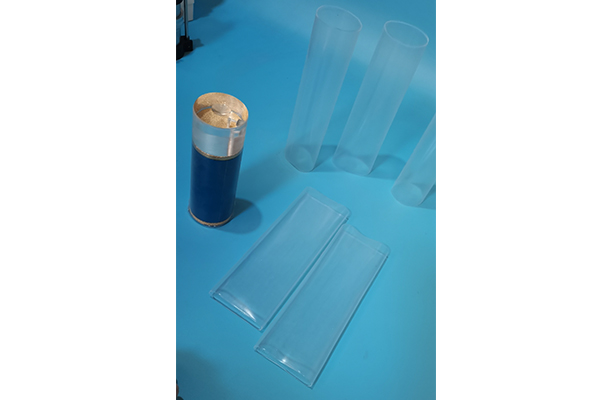
Transparent membranes may support photographic monitoring, digital image correlation or other optical methods, but suitability must be verified.
Potential optical problems include:
- refraction through the curved cell wall;
- refraction through the cell fluid;
- reflections from lighting;
- optical distortion caused by membrane stretching;
- moving wrinkles;
- bubbles attached to the membrane;
- changes in membrane thickness;
- camera movement;
- loss of focus during deformation.
Digital image correlation normally requires a visible, stable surface pattern. Depending on the research method, the pattern may be placed on the specimen, membrane or interpreted through the membrane.
Any marking material must be checked for:
- chemical compatibility;
- adhesion;
- influence on membrane behavior;
- visibility through the complete cell system;
- stability during deformation.
A transparent membrane should not be advertised as automatically suitable for quantitative optical strain measurement without system-specific validation.
How Thickness Affects Transparency
As wall thickness increases, less detail may be visible through the membrane. However, clarity also depends on formulation and surface finish.
Thinner membranes may provide:
- improved visual clarity;
- lower mechanical restraint;
- easier conformity to the specimen.
They may also have:
- greater puncture risk;
- more sensitivity to handling damage;
- greater local thinning when overstretched;
- lower tolerance of angular particles.
Thicker membranes may provide:
- easier handling;
- increased resistance to accidental puncture;
- greater durability around rough specimens.
They may also cause:
- lower transparency;
- increased membrane restraint;
- greater influence on soft or small specimens;
- a larger correction requirement.
Thickness should therefore be selected according to the test, not solely according to the desired visual clarity.
For detailed guidance, see How to Choose the Right Thickness and Size of Latex Membrane for Triaxial Tests.
How Diameter and Length Affect Performance
The membrane should fit the specimen, pedestal, top cap and sealing arrangement.
It should not be selected according to the triaxial cell’s internal diameter alone.
If the membrane is too small
Possible consequences include:
- excessive installation stretch;
- local wall thinning;
- reduced optical uniformity;
- increased membrane tension;
- specimen disturbance;
- tearing or puncture;
- difficulty positioning the membrane.
If the membrane is too large
Possible consequences include:
- wrinkles;
- folds;
- trapped air or fluid;
- uneven contact;
- poor sealing;
- movement during cell assembly.
Membrane length
The membrane must cover the full specimen and provide sufficient overlap around the pedestal and top cap.
The required finished length depends on:
- specimen height;
- top-cap geometry;
- pedestal geometry;
- O-ring positions;
- number of seals;
- expected axial strain;
- required end overlap.
A membrane that is too short may pull away from a seal. Excessive length can create folds around the end zones.
Does a Transparent Membrane Affect the Specimen?
Yes. Like every flexible specimen membrane, it can create boundary effects.
Membrane restraint
When the specimen expands laterally, the membrane stretches and develops tensile force. This force resists deformation and may contribute to the measured response.
The significance depends on:
- membrane thickness;
- membrane modulus;
- specimen diameter;
- soil strength;
- confining pressure;
- axial strain;
- deformation pattern.
Membrane penetration
In granular specimens, cell pressure can push the membrane into voids between particles at the specimen surface.
This can influence:
- measured volume change;
- consolidation interpretation;
- radial deformation;
- void-ratio calculations;
- stress–dilatancy behavior.
Transparency does not prevent penetration.
For more information, read Membrane Penetration Effect in Triaxial Testing Explained.
Wrinkles and folds
An oversized or incorrectly installed membrane may form folds. A transparent membrane makes some folds easier to see, but it does not prevent them.
End restraint
The overlapping membrane and O-rings create locally stiffer zones near the top cap and pedestal. This effect should be distinguished from friction at the specimen ends.
For a broader explanation, see Boundary Effects Caused by Latex Membranes in Soil Testing.
Using Transparent Membranes in UU, CU and CD Tests
| Test | Main membrane requirement | Possible value of transparency |
|---|---|---|
| UU | Reliable isolation during undrained shearing | Check installation, folds and visible punctures |
| CU | Seal integrity during saturation, consolidation and undrained shearing | Monitor assembly condition and possible leakage |
| CD | Stable sealing during consolidation and slow drained shearing | Observe long-duration deformation and membrane condition |
The membrane’s basic purpose remains the same in each test.
CU and CD tests may remain assembled longer than a rapid UU test. Long duration can make slow leakage, aging, creep and seal stability more important.
Installation Procedure
Follow the applicable laboratory method and equipment instructions. A general installation sequence is given below.
1. Confirm the required dimensions
Record:
- actual specimen diameter;
- specimen height;
- top-cap diameter;
- pedestal diameter;
- required sealing overlap;
- membrane nominal thickness.
2. Inspect the membrane
Under good lighting, check for:
- pinholes;
- cuts;
- tears;
- cloudy patches;
- local thickness variation;
- surface contamination;
- permanent folds;
- sticky or hardened areas;
- cracks near the ends.
Gently extending the membrane may reveal defects that are difficult to see in its relaxed condition. Do not overstretch it during inspection.
3. Inspect the apparatus
Check the:
- membrane stretcher;
- top cap;
- pedestal;
- porous stones;
- O-ring grooves;
- installation tools.
Remove debris and confirm that no sharp edge can damage the membrane.
4. Load the membrane into the stretcher
Expand the membrane only as much as necessary. Excessive vacuum or mechanical stretching can thin or damage the wall.
5. Position the stretcher
Lower it carefully over the specimen without contacting or disturbing a soft specimen.
6. Release the membrane evenly
Release vacuum or unroll the membrane according to the approved procedure. Check that it contacts the specimen without major folds.
7. Install the top cap and seals
Confirm top-cap alignment and install the required O-rings or other seals in the specified positions.
8. Perform a visual inspection
Use the membrane’s transparency to check:
- specimen alignment;
- filter-strip position;
- folds;
- trapped pockets;
- end overlap;
- surface damage;
- top-cap seating.
9. Complete system checks
Confirm that the drainage, pressure and measurement systems operate correctly before beginning the formal test stages.
For a more detailed procedure, see How to Install a Latex Membrane on a Triaxial Soil Sample.
How to Evaluate Transparency
“Transparent” should not be treated as a purely subjective marketing term.
A practical internal inspection can compare membranes using:
- the same printed target;
- the same distance;
- the same lighting;
- the same background;
- the same membrane extension;
- the same wall thickness where possible;
- photographs using fixed camera settings.
The laboratory can record whether it is possible to distinguish:
- specimen edges;
- printed line patterns;
- wrinkles;
- filter strips;
- small surface defects.
For quantitative optical work, more controlled measurements of light transmission, haze and distortion may be required.
Visual clarity tests do not replace dimensional or mechanical quality control.
Quality-Control Requirements
When purchasing transparent membranes, consider requesting:
| Property | Why it matters |
|---|---|
| Internal diameter | Controls fit and installation strain |
| Diameter tolerance | Supports consistency between membranes |
| Finished length | Provides complete coverage and sealing overlap |
| Wall thickness | Influences visibility, durability and restraint |
| Thickness tolerance | Reduces local weak or stiff zones |
| Material identification | Supports compatibility assessment |
| Tensile behavior | Helps evaluate force at working extension |
| Elongation | Indicates extension capacity under a defined test |
| Tear resistance | Supports handling and puncture-risk evaluation |
| Visual-defect inspection | Identifies pinholes, inclusions and uneven areas |
| Storage guidance | Helps prevent clouding, cracking and property loss |
| Batch identification | Supports traceability |
Do not compare supplier values unless the measurement methods and conditions are comparable.
Chemical Compatibility
Transparency does not indicate chemical resistance.
Natural rubber compounds can be affected by certain:
- oils;
- hydrocarbons;
- solvents;
- oxidizing chemicals;
- contaminated pore fluids;
- cleaning agents.
Possible changes include:
- swelling;
- shrinkage;
- softening;
- hardening;
- discoloration;
- cloudiness;
- loss of strength;
- loss of elastic recovery.
When chemical compatibility is uncertain, evaluate the actual compound under representative fluid, temperature, strain and exposure-time conditions.
A membrane that remains visually clear can still experience unacceptable mechanical changes.
Storage and Aging
Transparent latex can lose clarity and elasticity during unsuitable storage.
Potential aging factors include:
- heat;
- oxygen;
- ozone;
- ultraviolet light;
- direct sunlight;
- chemical vapors;
- prolonged stretching;
- contact with incompatible packaging or surfaces.
Possible signs of deterioration include:
- yellowing;
- cloudiness;
- whitening;
- cracking;
- tackiness;
- hardening;
- poor recovery;
- permanent deformation.
Store membranes according to supplier instructions, preferably:
- sealed in suitable packaging;
- in a cool, dry and dark location;
- away from heaters and sunlight;
- away from ozone-producing electrical equipment;
- away from oils, solvents and sharp objects;
- without tension or compression.
Use a first-in, first-out inventory system where appropriate, and inspect every membrane before use.
Can a Transparent Membrane Be Reused?
Transparency can make visible damage easier to identify, but it does not prove that a used membrane remains suitable.
After a test, the membrane may contain:
- localized thinning;
- small punctures;
- permanent set;
- sealing damage;
- chemical contamination;
- reduced elastic recovery;
- tear initiation near an O-ring.
Reuse should follow the laboratory’s approved procedure and the risk level of the test.
For critical or long-duration testing, a new inspected membrane generally provides better traceability than a previously stretched membrane.
Common Misunderstandings
“Transparent means stronger”
Transparency does not establish tensile strength, tear resistance or puncture resistance.
“Transparent means thinner”
Some transparent membranes are thin, but transparency also depends on formulation and surface finish.
“A transparent membrane makes the test more accurate”
It can help detect installation defects, but it does not correct equipment, saturation, drainage or calculation errors.
“The membrane should match the cell diameter”
The membrane primarily fits the specimen, top cap, pedestal and sealing system—not the inside diameter of the pressure cell.
“Transparency prevents membrane penetration”
It may make surface interaction easier to observe, but it does not prevent the membrane from entering granular surface voids.
“The specimen remains perfectly visible throughout the test”
Visibility can be reduced by refraction, reflections, condensation, cell-fluid condition, deformation and equipment obstruction.
Frequently Asked Questions
What is a transparent latex membrane?
It is a flexible specimen membrane designed to provide improved visibility while separating a triaxial specimen from the cell fluid.
What is its main advantage?
Its main advantage is visual inspection of installation, specimen condition and some deformation or failure features.
Is it suitable for every triaxial test?
No. Suitability depends on dimensions, thickness, mechanical properties, chemical compatibility, temperature, pressure and test duration.
Can it be used for UU, CU and CD testing?
Potentially, yes, provided it meets the applicable test and laboratory requirements. Test duration and leakage sensitivity should be considered.
Does transparency affect strength?
Transparency itself does not determine strength. Strength depends on the compound, cure, thickness, defects and test conditions.
Can it be used with coarse or angular soil?
It may be possible, but puncture risk must be assessed. A membrane selected only for clarity may be too vulnerable for a rough specimen.
Can it be used for image-based strain measurement?
Potentially, but the complete optical system must be validated for refraction, distortion, lighting, target visibility and membrane movement.
How should the membrane size be selected?
Use the actual specimen diameter and height together with the top-cap, pedestal, sealing and installation requirements.
What should be checked before use?
Check dimensions, wall condition, clarity, pinholes, cracks, tackiness, permanent folds and elastic recovery.
Where can transparent membranes be ordered?
Standard or custom transparent membranes may be available in different diameters, lengths and thicknesses. Before ordering, provide the complete specimen and test requirements rather than requesting transparency alone.
See the Transparent Latex Membrane product page for available configurations and current product information.
Information to Provide When Requesting a Quote
For accurate selection or customization, provide:
Application:
Specimen material:
Specimen diameter:
Specimen height:
Required membrane inside diameter:
Required finished length:
Required wall thickness:
Maximum cell pressure:
Back pressure:
Cell fluid:
Pore fluid:
Test temperature:
Expected test duration:
Expected axial strain:
Particle size and angularity:
Transparency requirement:
Applicable test method:
Required quantity:
Special inspection or documentation:
If the required membrane diameter is not known, provide the actual specimen, top-cap and pedestal dimensions so the supplier can review the fit.
Conclusion
A transparent latex membrane is a specialized version of the flexible membrane used around a triaxial specimen.
Its principal advantage is improved visibility. It can help laboratory personnel identify wrinkles, trapped pockets, misalignment, visible damage and some specimen deformation before or during testing.
Transparency does not replace the properties required for reliable performance. A suitable membrane must still provide:
- correct dimensions;
- adequate sealing overlap;
- appropriate wall thickness;
- sufficient extensibility;
- acceptable membrane restraint;
- puncture and tear resistance;
- chemical compatibility;
- stable performance for the required test duration.
The best transparent membrane is therefore not simply the clearest product. It is the membrane that provides useful visibility while meeting the mechanical, dimensional and environmental requirements of the complete test.





2 Responses